The challenge of fighting anti-Semitism felt simpler on October 8, 2023. The worst mass murder of Jews since the Holocaust had just taken place. Young and old, man and woman, soldier and noncombatant—all had been attacked, many raped, some tortured, many killed, and from the living and dead in the aftermath, 251 were kidnapped into Gaza. The world was horrified.
Twenty months on, the horror has largely evanesced outside the Jewish and staunchly pro-Israel community, and a sullen, angry, and viral anti-Semitism has taken its place. Jews the world over who believed that education, outreach, and compassion would dissipate the stench of Jew-hatred were proved wrong in the most horrible of ways.
On May 21, a keffiyeh-clad anti-Semitic terrorist murdered two young Jews—Israeli Embassy employees Yaron Lischinsky and Sarah Lynn Milgrim—and the prevalent sentiment was despair. Eleven days later, an illegal Egyptian immigrant firebombed a peaceful march made up mostly of elderly Americans demanding the release of Hamas’s hostages. Three days before that, Hassan Chokr of Dearborn, Michigan, pled guilty to federal gun charges; his plan was to massacre parents and children at Temple Beth El day care in Bloomfield Hills.
That same week, hostages still being held by Hamas in Gaza notched 600 days of hell, as have their families. Over the course of those days, the Israel Defense Forces’ presence in Gaza has waxed and waned. Several cease-fires and hostage exchanges failed to yield a more lasting solution. And throughout it all, through the revelations of the ghastly murders of hostages, the crippling of Iran’s proxies and air defense, the decimation of Hezbollah, the death of successive Hamas leaders, and the fall of Bashar al-Assad in Syria, the inexorable growth of anti-Semitism outside the Middle East has continued apace, particularly in the United States, Europe, Canada, and Australia.
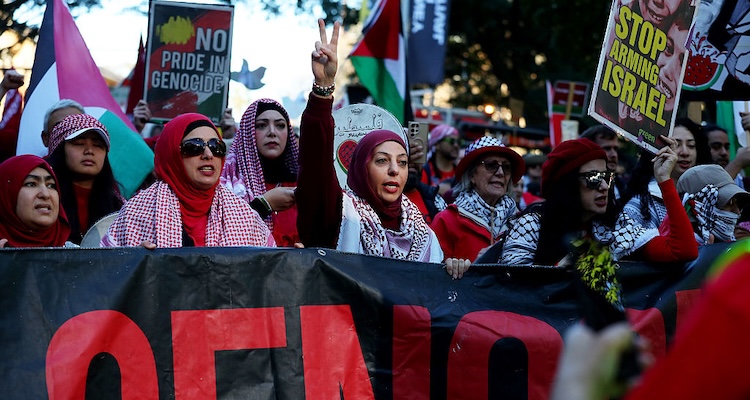
In the United States alone since October 7, there have been more than 10,000 reported anti-Semitic incidents, a rise of nearly 300 percent, according to the Anti-Defamation League. Those attacks have included murder, maiming, desecration of religious sites, and harassment of Jews in the streets, at schools, restaurants, places of worship, and at peaceful demonstrations. In Canada, it’s been even worse, with a recorded 562 percent increase in anti-Semitic incidents, a quarter of which were violent. The United Kingdom experienced a 450 percent increase, with nearly 2,000 incidents in the first half of 2024. Pro-Hamas and violent anti-Israel and anti-Jewish demonstrations have become a staple in the UK, where Jews report they feel unsafe in the streets. Metropolitan police have been recorded taking the side of Islamists and supporters of Hamas. France, Germany, and much of Europe; Australia, South Africa, Brazil, and Chile—all have reported astronomic escalations in attacks on Jews.
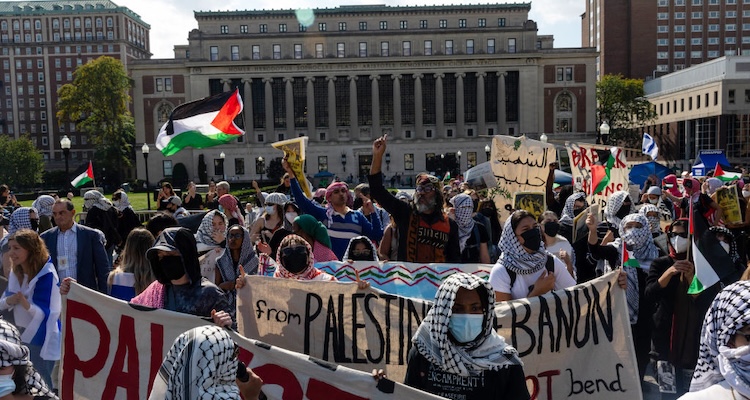
From October 7, 2023, through the end of the 2023–24 academic year, student governments and faculty or staff unions at U.S. colleges and universities reviewed at least 86 resolutions connected to the Boycott, Divestment, and Sanctions (BDS) movement that recommends ending all economic investment not only in Israel but in companies that do business with the Jewish state. Of these, 77 were approved, and nine failed. And while universities have begun to crack down on pro-Hamas encampments on university grounds, the Gen Z/academic Jew-hating wave has yet to crest.
Meanwhile, in the halls of international organizations—many U.S.-taxpayer funded—anti-Semitism was revealed as an institutional bedrock, integral to the mindset of the global bureaucrat wherever he serves. The story of the Israel-obsessed Human Rights Council is old hat (in 2024, there were five resolutions condemning Israel and zero condemning Hamas, Iran, Russia, China, or Syria). But the HRC is only the tip of the iceberg. The United Nations General Assembly has passed 17 Israel-related resolutions since October 7 but only six regarding the entire rest of the world. Among the smorgasbord of United Nations agencies most of us have never heard of—UNOCHA, OHCHR, the WFP, and don’t forget the “UN Special Committee to Investigate Israeli Practices”—there has been a laser-like focus on Israel and its alleged predations against the Palestinians, almost never accompanied by condemnations of Hamas, Palestinian Islamic Jihad, Hezbollah, or the Houthis, none of which is designated as a terrorist organization by the United Nations.
How, many Jews are asking, can we be losing this way in the face of an enemy so evil, so bigoted, so reminiscent of the Jew-hatred of the Nazi era? How is “never again” again?
But all is not lost. This is simply the end of the beginning of a generational fight that can be won, slowly. And the fight is on.
_____________
The trajectory of anti-Jewish activism and attacks was knocked off course with the swearing in of the Trump administration in January 2025. Where Joe Biden only reluctantly entered the fray of university encampments, making only one major statement in May 2024 against the “ferocious surge of anti-Semitism in America and around the world” since October 7, Donald Trump tore into the question of both American and international anti-Semitism with immediacy and ferocity. Nine days into his second term, Trump signed Executive Order 14188, instructing federal agencies to report to the White House on their current measures to combat anti-Semitism; urging the Department of Justice to take rapid legal action against acts of pro-Hamas vandalism and intimidation, particularly on campuses; ordering the deportation of noncitizens breaking laws on anti-Semitic harassment or support for terror groups; and launching investigations into colleges and universities for failing to protect Jewish students.
Trump also signed EO 14282, “Transparency Regarding Foreign Influence at American Universities.” This executive order instructs the Department of Education to redouble enforcement of Section 117 of the Higher Education Act, which requires universities to disclose foreign funding, with Trump underscoring the need to reveal “the true source and purpose of the funds.” In Trump’s first term, an audit by the Department of Education revealed that universities had failed to disclose some $60 billion in foreign donations. The EO also instructs the secretary of education, along with leaders of other relevant federal agencies, to enforce disclosure obligations and, most important, specifies that compliance with these reporting rules is a material requirement under the False Claims Act—meaning that violations can trigger significant legal consequences and loss of federal dollars.
The White House has also created a Joint Task Force to Combat Anti-Semitism, a multi-agency, university-focused group that has prompted a cut in federal funding from universities such as Columbia and Harvard; launched investigations into multiple other schools, including the University of California system; and weighed in legally to support Jewish students’ lawsuits over campus anti-Semitism.
There have been arrests and deportation orders, most notably Syrian-born Columbia graduate student Mahmoud Khalil, a darling of the radical left and self-appointed spokesman for Columbia’s notorious pro-Hamas encampments, and Georgetown University’s Badar Khan Suri, an Indian national and postdoctoral fellow at Georgetown University who appeared with the late Hamas leader Yahya Sinwar (and whose father-in-law was a senior Hamas official). In the former case, a judge has affirmed the administration’s right to deport Khalil. In Suri’s case, a judge has ordered his release. Both cases remain in the court system.1
In addition, the Trump administration has slashed funding for rabidly anti-Israel international organizations, including UNRWA, and withdrawn completely from the UN Human Rights Council. It has also backed the creation of the Gaza Aid Foundation, founded to supplant both UNRWA and the UN system’s operations in Gaza, which frequently permitted both the sale and theft of food aid by Hamas. And finally, among the rescissions in spending transmitted to Congress in early June, the State Department slashed UN peacekeeping operations by $361 million, specifically targeting the UN Interim Force in Lebanon for complete elimination, citing its “abject failure to contain Hezbollah.”
Notwithstanding the Trump administration’s focus on both anti-Semitism and anti-Semitism-motivated criticism of Israel and Zionism, their concerns have been directed almost exclusively toward left-wing bigotry. Where allies of the president have veered into Jew hatred—for example, Tucker Carlson hosting Holocaust denier and Nazi apologist Darryl Cooper and anti-Semitic pastor Munther Isaac, and podcaster Joe Rogan also hosting Cooper and Ian Carroll, a “journalist” best known for spreading anti-Semitic conspiracy theories, including claims that “Israel did 9/11” and that the U.S. is run by a “Zionist mafia”—the White House has been conspicuously silent. Nor has the president himself eschewed the dog whistles favored by right-wing Jew-haters: In a major address in Saudi Arabia on his first trip abroad, he inveighed against “nation builders, neocons, or liberal nonprofits,” using the code-word “neocon” to signal his lack of interest in exporting American-style democracy.
When experts address the question of “foreign funding” at U.S. nonprofits and in academia, they are referring most obviously to cash flowing in from officials of, friends to, and companies related to the Chinese Communist Party. But when it comes to the radicalization of American campuses and the extremist activities of several groups at the center of pro-Hamas activity, typically the funder in question is the tiny emirate of Qatar. Here’s the problem: Both Joe Biden and Donald Trump unquestioningly bought in to the Qatari narrative that it is a uniquely pro-American land willing to play an honest-broker role in bringing together the United States and Islamist extremists like Hamas and the Taliban to fashion a more peaceful future.
They were conned.
Qatar’s role in fanning the flames of anti-Semitism has been well documented. The emirate’s influence and cash have helped ensure the closure of university centers that were studying Islamist extremism and suffocated new inquiries. They have underwritten NGOs promoting pro-Hamas narratives and skewed American university (and middle- and high-school) curricula to promote an anti-Israel agenda.
Despite repeated studies detailing the malign nature of Qatari influence in the United States and globally through its state-financed and directed al Jazeera family of television and social media products, successive U.S. administrations have cozied up to Doha because they think Qatar’s close ties with global terrorist groups and their sponsors is providing them with the means of negotiating directly and indirectly with those groups. Negotiations over Hamas’s hostages take place in Qatar. Doha is often the venue for negotiations with Iran, which is why the Biden administration stashed billions in sanctioned Iranian cash in Qatari banks.
Qatar also hosts and pays for Al Udeid, the largest U.S. airbase in the Middle East. Despite the fact that military leaders suggest the base is strategically vulnerable, the Biden administration renewed its lease for 10 years, with Qatar paying a good deal of the freight.
Qatar understands it needs outside support to continue its two-faced activities, and its checkbook is open. In 2019 and 2020, a Qatari royal invested about $50 million in conservative news outlet Newsmax, securing a significant minority stake. And following the 2024 U.S. presidential election, Qatar significantly ramped up its outreach to other conservative media outlets; the Washington Examiner reports that Department of Justice records show a more than 50 percent increase in such efforts.
Before the election, only a small fraction of Qatari lobbying targeted right-leaning media, but after Trump’s victory, more than half of Qatar’s outreach was directed at platforms like Fox News, the New York Post, Just the News, and the Daily Mail. Qatar also pursued high-profile media engagements, such as facilitating a widely viewed interview between Tucker Carlson and the Qatari prime minister.
Has it paid off? Absolutely. Between lavish Qatari spending, plus a $400 million jet presented as a gift to the Trump presidency as a new Air Force One, official Washington, like the leadership in academia, has been seduced. And the result is that scrutiny of the emirate’s sponsorship of anti-Semitism in U.S. universities, through NGOs and via press outreach and ownership, has been stymied. Similarly, legislation on questions relating to foreign funding promoting anti-Semitism in the United States appears to be frozen, along with the rest of the critical legislative agenda to address the challenge of growing Jew-hatred in America.
Yet all is far from lost. Laws must change, and pressure must be brought on Washington. A natural starting point to bolster the legal infrastructure around fighting Jew-hatred at the federal level is the Anti-Semitism Awareness Act. Introduced by Representative Mike Lawler (R-NY) and Representative Josh Gottheimer (D-NJ) in 2024, the bill codified a 2019 Trump executive order expanding Title VI of the Civil Rights Act of 1964 to include discrimination on the basis of religion, charging federal agencies tasked with Title VI enforcement to use the International Holocaust Remembrance Alliance (IHRA) definition of anti-Semitism in consideration of violations of the Act.
The rationale behind the codification of IHRA was simple yet foundational: Absent a clear and shared understanding of the definition of anti-Semitism, legal and philosophical arguments would continue ad nauseam over what actually constitutes anti-Semitism in law.
After opposition from Republicans on First Amendment and religious-freedom grounds, and Democrats over free-speech concerns, the bill eventually passed the House in May 2024, only to die in the Senate. Chuck Schumer, then the Democratic majority leader, reportedly feared that divisions between far-left progressives and more moderate pro-Israel Democrats would fuel a narrative that would be damaging to his party in the November elections.
Since Trump’s election and the GOP takeover of the Senate, efforts to codify IHRA have not fared much better. A promise from Schumer to take up the Anti-Semitism Awareness Act in the lame-duck session after the 2024 election was broken, and since its reintroduction in 2025, the bill has floundered in committee, a sorry testament to Congress’s dysfunction.
Other recommendations for legislative action have included:
Enhancement of Section 117 of the Higher Education Act, which mandates that universities report donations over $250,000 from foreign governments and broadens already legislated limits on university funding from so-called countries of concern—Russia, Iran, North Korea, and China;
Criminalizing noncompliance with federal requirements for disclosure of foreign funding (in line with the Foreign Agents Registration Act);
Leveraging federal funding to academic institutions to enforce compliance with federal law and executive orders on anti-Semitism;
Mandating a State Department report on countries propagating violent anti-Semitism and anti-Semitic propaganda;
Legislating changes in student-visa rules to strip holders engaged in unlawful protests or support for terrorism (the Patriot Act already bars entry to noncitizens who use a “position of prominence within any country to endorse or espouse terrorist activity”);
Requiring nonprofit 501(c)(3)s to disclose both public and private foreign donations;
Sanctioning institutions that institute BDS rules in line with existing law that sanctions compliance with the Arab Boycott of Israel.
The executive branch has used its administrative power to effect many of these changes.
The Trump administration has aggressively sought to deport student-visa holders who have been supporters of Hamas or engaged in campus anti-Israel protests. Much more contentiously, the Joint Task Force to Combat Anti-Semitism has announced deep cuts in federal funding for institutions that fail to accommodate administration demands to rectify their handling of anti-Semitism, student protests, and campus governance—and, in the case of Harvard, an additional laundry list of demands including better balance in faculty composition. These cuts have resulted in at least 13 university lawsuits that will likely stretch through the administration’s lifespan.
In addition, Secretary of State Marco Rubio has directed U.S. embassies and consulates to begin expanded social media screening for all student-visa applicants, suspending all interviews until a new policy is finalized. The proposed changes in policy envision reviewing applicants’ online activity for signs of anti-Semitic, radical, or anti-American content. And spokesmen for the administration have insisted that efforts to deny Harvard University any student visas is effectively a pilot attempt to apply new standards to the issuance of student and exchange visas across the board.
Through the prism of a single-minded focus on extinguishing anti-Semitic practices, tolerance for anti-Semitism on campus, and the importation of students who may already fuel the raging campus fires of anti-Semitism, the Trump administration’s actions could be viewed as a decisive response to a major civil-rights problem in the United States. Certainly, one can say that were the victims of discrimination any minority group other than Jews, the outraged reaction to the new Trump strictures would have been far more muted.
_____________
But there is a problem beyond objections to the method, means, and motivation of Trump officials in fighting anti-Semitism. Any sustained response—even one less assertive than Trump’s—to anti-Semitism in America must be grounded in law. And while some of the administration’s actions will likely be sustained in court rulings, particularly those regarding the almost unassailable executive authority over immigration, others will go by the wayside instantaneously when another party takes the White House, and perhaps before. It is for this reason that Congress is so critical.
Unfortunately, on this question, as on so many others, Congress has embraced rhetoric over action.
In 2023–24 as the anti-Semitic conflagration swept through academia, many on Capitol Hill recognized the characteristic role of TikTok in fanning the flames. The Chinese social media company played a critical role in popularizing anti-Semitic tropes and in organizing anti-Semitic gatherings. And Congress did act, if admittedly for reasons going well beyond TikTok’s promotion of anti-Semitism. It required the president to shut down or force the sale of TikTok. Donald Trump has done neither, choosing not to enforce the letter of the law. Congress has done nothing, effectively undercutting its own legislative power. One can at least take some solace in the fact that this law was passed; not so, most others.
Like the Antisemitism Awareness Act, there have been several important pieces of legislation introduced relating to foreign donations to universities, including additional restrictions for so-called countries of concern; support for terrorism by nonprofits and organizations such as Students for Justice in Palestine (SJP); additional reporting requirements for student-visa holders engaging in anti-Semitic or pro-terror activities; and more.
One bill, the DETERRENT Act, introduced by Representative Michael Baumgartner (R-WA-5) and a bipartisan group of co-sponsors, would lower the financial threshold for universities on reporting foreign gifts and contracts, particularly from countries of concern. It would also require colleges and universities to disclose detailed information about all substantial foreign donations and partnerships. Institutions that fail to comply with new transparency standards would face the risk of losing access to federal student-aid programs. The act also directs the Department of Education to create a publicly accessible database of reported foreign gifts, and it authorizes new penalties for noncompliance. It has gone nowhere in the Senate.
The second bill passed the House in 2024: Introduced by Representative Claudia Tenney (R-NY), the Stop Terror-Financing and Tax Penalties on American Hostages Act legislated tax relief for hostages and, more important, established a process by which the secretary of the Treasury could designate a nonprofit as a “terrorist supporting organization” if, within the previous three years, it has provided material support to a designated foreign terrorist organization. That provision in the Tenney bill made it largely intact into this year’s HR 1, the “Big Beautiful Bill Act,” before it was quietly stripped out in committee.
Other bills relating to punishing compliance with BDS, requiring greater transparency regarding foreign donations to both NGOs and universities, requiring public disclosure of donors to nonprofits receiving federal funding, and demanding disclosure of university rules regarding anti-Semitism have been introduced, only to wither on the committee vine.
Congress’s failure to enact laws to address the proliferation of anti-Semitic activities in the United States, on and off campus, means that, just as was the case during the Trump-Biden transition in 2021, any future cross-party transitions will see a slew of reversals of executive branch executive orders, as well as rules and regulations promulgated while Donald Trump was in office. And the policies enacted therein will simply cease to exist.
Nonetheless, Congress has not been entirely supine. Investigations into organizations such as American Muslims for Palestine (AMP) and its subsidiary groups continue in the Senate Health, Education, Labor, and Pensions Committee. Even more encouraging, the State of Virginia, where AMP is headquartered, is digging aggressively into AMP’s and Students for Justice in Palestine’s possible ties to terrorism. That probe began with a formal request for documents and information from AMP in late 2023, citing potential violations of state charity laws and links to the national SJP movement. AMP challenged the request in court, but, in mid-2024, a Richmond court rejected its arguments and ordered AMP to comply with the state’s inquiry. After further legal back-and-forth, the court reaffirmed in May 2025 that AMP must turn over the requested materials. The investigation is still underway.
So, yes, there is movement forward, but it is halting and confusing, and the enemies of Israel are still working relentlessly. The voices of Jew-hatred still screech. And the physical danger in which Jews on American soil find themselves is growing. This all contributes to a dispiriting feeling of failure for advocates of stronger measures to fight Jew-hatred. And there have been failures. But we cannot sink into despair, because that would lead to inaction. We must be as relentless as our foes. Congress must be pressured to cement into law the necessary safeguards ensuring that U.S. tax law, schools, and media do not become instruments of an increasingly anti-Semitic agenda. The critical initial steps require awareness and transparency, and fortunately, we now have much more of that than was the case just two years ago.
Before October 7, the malign agenda of foreign agitators and anti-Semites at home was largely obscured from view. Jews believed that the era of overt Jew-hatred was in the past. There is no one who believes that today. We know what the problem is, we know what needs to be done, and, while it will take time to institutionalize the kinds of protections imperative to keeping Jews safe in America, it will happen if we have perseverance and courage. We have seen anti-Semitism weaponized to murder and harass Jews around the world and at home. The time has come to turn the tables, and to weaponize anti-Semitism against its perpetrators and sponsors.
1 We should also note the prominent case of Rumeyza Ozturk, a doctoral student at Tufts in the United States on a student visa. While she is a Boycott, Divest, and Sanctions (BDS) movement sympathizer, she has not been active in any overt pro-Hamas activities. Notwithstanding, she was arrested and detained. Her case also remains in the court system.
Photo: Lisa Maree Williams/Getty Images
We want to hear your thoughts about this article. Click here to send a letter to the editor.