As we consider Israel’s iron determination to rid itself and the world of the Iranian nuclear threat, we must stop to wonder at the seriousness of national purpose demonstrated by the Jewish state over the course of the past two decades. According to the analyst Amit Segal, the first elements of the plan to take out Iran’s nukes were put in motion 19 years ago, in 2006, when trucks used in June 2025 to hide and then launch surface-to-surface missiles were first driven into Iran by Israeli intelligence agents and hidden there.
Since those trucks were put in position, there have been eight Israeli national elections and five presidential contests in the United States. Over that time, four different men have served as Israel’s prime minister and four as America’s president. All the while, Israel has systematically upgraded its capacity, innovated new technologies, trained pilots, developed intelligence assets, and mapped every square inch of Iran. Along the way, it has introduced computer viruses into Iran’s mainframes. It has stolen the paperwork detailing the history of Iran’s nuclear program. It has assassinated nuclear scientists and generals. All of this was done to retard or slow down Iran’s progress. Israel has also had to deal with friendly presidents in George W. Bush and Donald Trump, a viciously hostile president in Barack Obama, a cognitively impaired president in Joe Biden, and the loss of moral clarity about the threats to Jewish existence in most of the West’s democracies.
Through it all, Israel prepared. Never stopped preparing.
In the most fractious democracy in the world, there was and has remained an almost unanimous consensus: Iran could not be allowed to go nuclear. And here is why. At the beginning of the 21st century, Iran had made it clear that its ultimate ambition is to wipe Israel off the map. Successive presidents—the Ayatollah Rafsanjani and Mahmoud Ahmadinejad—used precisely those words to describe Iran’s intentions. And before it could reach the point of possessing a nuclear weapon to fulfill those intentions, Iran sought to bedevil and torment Israel in every way it could. Its wholly owned subsidiary in Lebanon, Hezbollah, was trained to kidnap Israeli soldiers and fight Israelis on their border while being given the resources by Iran to secure hundreds of thousands of rockets as a constant worry and occasional killer. Iran then allied with Hamas in Gaza and became its patron and the key supplier of its materiel as well.
The Islamic Republic of Iran is a serious and determined regime in firm control of a nation of 90 million people. Israel does Iran the courtesy of taking it seriously. The mullahs are not dilettantes. As serious men, they surely viewed Barack Obama’s stated intention of rewarding their cooperation by letting them back into the “community of civilized nations” with the contempt such condescension and folly deserved. The Shiite mullahs believe in their civilization, not ours. They are not citizens of the world, like Obama. They are here to deliver the world from itself. They believe they are the world’s prophets, the keepers of the faith of the 12th Imam. And they have come to believe that they are here to deliver the world from the Jews.
Through their proxies, through the terrorists they train, through the nuclear program they have consistently fought to enshrine, the Iranians have been waging a war against the Jews.
_____________
“The War Against the Jews” was the title of Lucy Dawidowicz’s seminal history of the Holocaust, published half a century ago, in 1975. Her landmark study provided definitive proof that the elimination of the Jewish people had been the animating purpose of the Nazi regime and the overarching goal of Hitler’s mission on earth. Dawidowicz’s conclusion was revolutionary, because earlier historians had argued that the Nazi commitment to the “final solution” had come about incrementally over the course of the Third Reich, whose leaders were more consumed with consolidating power inside Germany and then furthering their war aims. In fact, as she demonstrated, Hitler’s determined pursuit of genocide was often damaging to Germany’s war efforts, since it diverted precious resources and led to the slaughter of Jews whose slave labor could have been helpful and whose scientific know-how could have been transformative. But Hitler wanted all Jews dead. That was his truest calling.
The War Against the Jews also detailed the desperate and heroic efforts by Jews in Europe to find some kind, any kind, of path through the catastrophe and offered a stunning moral defense of those Jews whom the Nazis had empowered to run the ghettos and other locales where Jews were hanging on by their fingernails after the Nazi takeover of Europe. These officials, the Judenrat, often behaved badly and corruptly, but as Robert Alter noted in his review of the book in these pages, even the worst of them “were trying desperately to use what scant means the Nazis permitted them, to save whatever Jewish lives could be saved, while they were hardly in a position to realize that the Nazis intended no Jewish lives to be saved.”
Though many fought with unthinkable bravery in the Warsaw ghetto and in the countrysides, Jews had neither the means nor the ability to save themselves. And there was no one to save them. The Allies who rescued the world from Hitler did not do so to save the Jews; indeed, Franklin Delano Roosevelt would not even take relatively cost-free measures to slow down or bollix the final solution, like bombing the train tracks to Auschwitz. The Nazis waged a war against the Jews that was entirely one-sided. Yes, there was a war against Hitler. But there was no war against the war against the Jews.
Nor could there have been. We live in a reality in which the Holocaust happened. The people of the 1940s lived in a world before the Holocaust. What Hitler was doing was unimaginable, unthinkable, without precedent, and beyond anyone’s capacity to grasp.
It was something new.
And something new came of it.
The State of Israel was founded three years almost to the day that Nazi Germany collapsed. And almost immediately, the new Jewish state made clear that any effort to make war against the Jews would be met with war in return. There would never again be a military assault against the Jews that would go unanswered. Jews would fight.
Israel’s Jews fought 22 Arab countries to a standstill in the first year of the state’s existence. Seventeen years later, after Egypt tried to strangle Israel’s economy by shutting down its access to shipping, Israel acted again. In six days, it destroyed Egypt’s air force, pushed the Jordanians back to the East Bank of the Jordan River, and seized the Golan Heights from Syria. It was, some said, the most shockingly lopsided military triumph since Henry V’s defeat of the French at Agincourt 500 years earlier.
Nearly two millennia after Jews had been expelled from their homeland and sent to live in a Diaspora whose survival remains the greatest miracle of human history, the war against the war against the Jews had resulted in a once-unthinkable victory.
Then, six years later, disaster struck. Israel was attacked on Yom Kippur in a daring combined assault that took the government by surprise. A brutal three-week conflict in which Israel nearly lost a tank war with the Syrians in the north finally ended with the Jewish state laboriously turning the tide against the Egyptians, whose army in the Sinai was only saved from obliteration through a negotiation with the United States. The overwhelming confidence Israel felt after the Six-Day War was gone. The 1973 war against the Jews had been unsuccessful. But the war against the war against the Jews had been too costly to bear.
Almost 50 years to the day, Israel’s new sense of its own military and strategic superiority—earned through its stunning technical achievement of an almost impregnable air defense—was again shaken to the core. The surprise attack on October 7 led to the horrifying realization that Hamas had been building an invasion army and an underground military city almost in plain view of the Jewish state.
The war against the Jews had scored at least a partial success here, and it was gaining ground in the United States and Western Europe as well with the outright expressions of anti-Semitism that exploded outward in every direction. The sense that the enemies of the Jews were winning was exacerbated by the impotence Israelis were experiencing due to the continuing captivity of the hostages. Indeed, when a mission in the tunnels under Rafah came within yards and seconds of rescuing six prisoners in a tiny replay of the heroic Entebbe effort in 1976, those captives were savagely murdered rather than saved. Through its proxy, Iran was not only holding actual living Jews hostage, it was holding the world Jewish community hostage emotionally as well.
What Israel did not know, could not have known, as it was undergoing these existential torments, was just how deeply committed its government and its leadership were to the ultimate battle in the war against the war against the Jews—which is to say, the fight against Iran. Israel began to use countermeasures it had been meticulously setting in place for decades against the true motive actor in the 21st-century war against the Jews.
In April 2024, Israel assassinated two Iranian generals when it bombed an Iranian consulate in Syria. This intelligence triumph so enraged Iran that for the first time in Israel’s history, the mullahs decided to strike directly at the Jewish state. They did so with a drone attack that proved ineffectual (in part due to American participation in shooting down the drones). Israel responded to Iran’s aggression with a surgical strike on a defensive radar system inside Iran near the Natanz nuclear site—a clear message that it had the means of reaching Natanz and doing greater damage but that it had chosen to be measured and guarded…this time.
In the summer of 2024, Israel did something so dramatic, it could have come from the pages of a Daniel Silva novel: It assassinated the head of Hamas, Ismail Haniyeh, in an apartment in a guest house in Tehran. Reportedly, it had prepositioned a tiny bomb in the room months earlier. That put the Iranians on notice: Israel had them so thoroughly penetrated that no Iranian could be sure any conversation was not being overheard, or that any individual location was safe should Israel decide to act.
And then Israel went to work in Lebanon. In September, literally thousands of Hezbollah operatives were wounded and killed when their beepers exploded simultaneously. A week later, Hezbollah chief Hassan Nasrallah was meeting in a bunker deep below his terrorist outfit’s Beirut headquarters. Israel blew it and him up, then continued its decapitation of Hezbollah’s operatives. Hezbollah had been killing Israelis and staging terrorist attacks on Jews for 40 years.
The war against the war against the Jews had taken another dazzling turn.
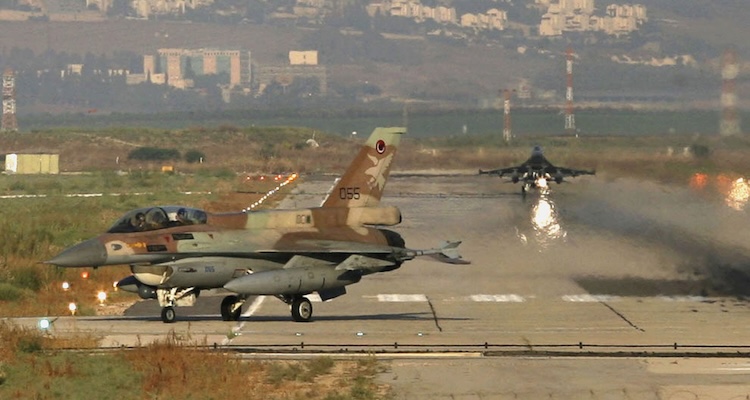
A humiliated Iran chose to act. In October, it launched a barrage of ballistic missiles at Israel—200 in one night. Israel declared it would respond at a time and place of its choosing. That time came three weeks later. Israel showed its hand militarily in its most shocking display of military authority since 1967. In a single evening, Israeli pilots flew 1,000 miles, destroyed very nearly the entirety of Iran’s air defenses, and got home in time for breakfast.
Netanyahu says he gave the order to make the final preparations for a strike on Iran’s nuclear facilities in November 2024, once intelligence reports made it clear that Iran was rushing toward the bomb. Something else happened in November 2024, of course—the election of Donald Trump and the end of the Biden-Harris era. An administration increasingly unfriendly to Israel was not going to be succeeded by its clone, which surely came as a relief to Netanyahu and Company.
Still, when Netanyahu was ready to go on April 13, he was informed by Trump that the American president intended to go into direct negotiations with Tehran on a new nuclear deal. Netanyahu pulled back.
Trump told the mullahs he would give them 60 days to see reason. On the 61st day, Israel struck.
What this account of the war against the war against the Jews should suggests is this. Israel would have struck one way or another. It would have struck with Kamala Harris in power. It would have struck even if Trump had been openly hostile. Israel would have struck Iran because it had no choice but to strike Iran.
Preventing Iran from going nuclear is not only the reason Benjamin Netanyahu believes he was elevated to power. It is the very reason Israel exists.
Now the war is on—the war against the war against the Jews, as never before. It is the war that could not be waged four score and seven years ago because there was no strong and determined Jewish state in existence. Israel has spent 78 years of fighting and growing and failing and succeeding and learning and sacrificing to get to this moment.
God bless and Godspeed.
—June 16, 2025
Photo: Stringer/Getty Images
We want to hear your thoughts about this article. Click here to send a letter to the editor.