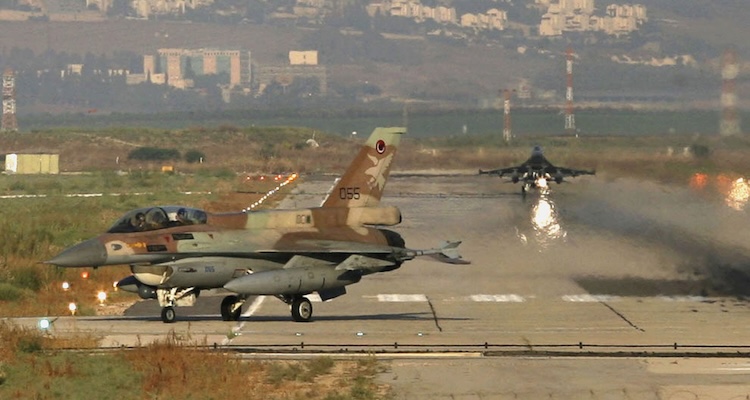
When is a failure a success? The Israeli intelligence fiasco that preceded the October 7 assault by Hamas in 2023 is undeniable. However, the Israeli military strategy that helped give rise to that disaster was also the key to some of the triumphs Israel has achieved in the nearly two years since, against Hezbollah in Lebanon and against Iran. That strategy was known as the “Campaign Between the Wars.” During a decade in which Israel’s military would engage sporadically in open cross-border conflicts, the IDF methodically honed its ability to combine precision airpower with granular intelligence and astounding speed. That is how Israel gained the upper hand in the seven-front war it has been waging across the Middle East. Those same capabilities are now likely to help lock in Israel’s gains moving forward.
_____________
The “Campaign Between the Wars” was designed to push war into the future. By the 2010s, the Islamic Republic of Iran had surrounded Israel with zealous proxies, which were armed to the teeth with rockets, drones, and other lethal weapons. By far, Lebanese Hezbollah was the most potent member of this so-called Axis of Resistance, because it possessed a growing arsenal of precision-guided munitions. Separately, Hamas, Islamic Jihad, Shiite militias in Syria and Iraq, and the Houthis in Yemen added to the threat. In coordination with Iran, which continued to expand its arsenal of ballistic missiles, these proxies posed an existential threat to the Jewish state.
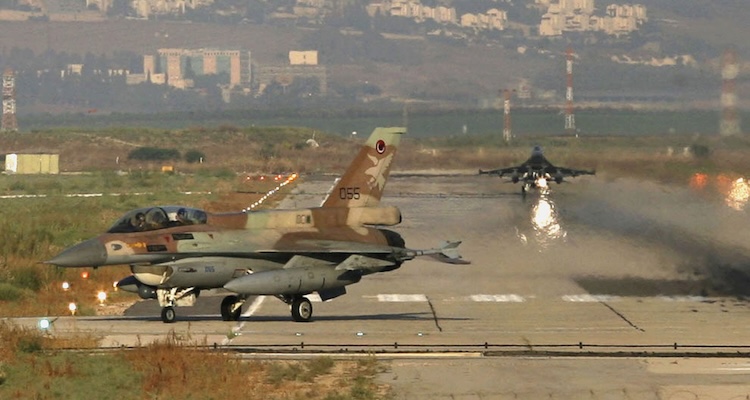
So rather than launching a direct war against Iran and its “Ring of Fire,” the Israelis began attacking in the gray zone. Unattributed strikes, mostly designed to prevent additional weapons from entering the theater, became a hallmark of the Israeli army. Most of these strikes occurred in Syria, which had become the transit point for the Iranian regime to transfer advanced weaponry to Hezbollah. The goal was to delay the inevitable war with Iran and its proxies, while creating conditions under which Israel could prevail in the war that would eventually come.
Integrating intelligence and firepower—especially airpower—on a short fuse, the Israelis were able to quickly prevent many of these weapons from reaching Hezbollah in Lebanon. Hundreds, perhaps even a thousand, attacks were executed. It was a remarkable display of Israel’s cutting-edge capabilities. The attacks never led to escalation, mainly because the Syrian regime was preoccupied with the civil war that threatened it more directly.
This gray-zone campaign occasionally extended into other physical jurisdictions. There were no air strikes on targets inside Iran, but mysterious explosions at various military and nuclear facilities bore the Mossad’s signature. The campaign also ventured into the virtual realm. Cyber and psychological operations complemented the kinetic strikes as the campaign expanded over the years.
In the years leading up to October 7, the Campaign Between the Wars was hailed a success in Israeli security circles. The strategists and operators who birthed this strategy celebrated their creation. And it was infectious. Analysts (like me) marveled at the fact that Israel was successfully striking its enemies and preventing them from gaining strength. It was minimal risk and clear reward.
But the celebrations were premature. While the campaign may have prevented Israel’s enemies from growing stronger, it did not actually make them weaker. Iran’s “Ring of Fire” remained firmly in place.
In hindsight, Israel committed one serious error in its prosecution of this campaign. It chose not to erode the capabilities of Hamas. The military and political echelons considered Hamas to be a lesser threat, especially compared with Hezbollah. In this way, one could argue, the campaign made the October 7 massacre possible.
The soul-searching inside the IDF and Israel’s intelligence community began almost immediately after the catastrophic attacks. One official after another stepped forward to accept responsibility for their failures (with the notable exception of Prime Minister Benjamin Netanyahu). The failure to predict the attack, the deployment of forces away from the Gaza border prior to the attack, and the poor response in real time to the breach of Israeli territory were among the errors that demanded accountability. Remarkably, there was little to no talk of the Campaign Between the Wars.
It was only months later, nearly a year into the October 7 wars, that I began to ask officials—both for-mer and current—how they viewed what was arguably a signature component of IDF strategy leading up to
the worst military and intelligence failure in the country’s history. True to form, the Israelis could not agree. Some officials readily acknowledged that the campaign failed to meet its primary objective because it had failed to forestall a major war. Others rejected that notion entirely. They contended that the war would have been far worse had Israel not weakened its enemies by waging this campaign. It was hard to argue with either side.
Perhaps the most interesting response came from a former Israeli Air Force official who claimed that some of the most impressive strategies deployed by the IDF at the most dramatic moments in the current multifront war were borrowed from the Campaign Between the Wars. Carefully targeted air strikes based on high-resolution intelligence were at the heart of the Campaign Between the Wars, and it was this kind of action that eliminated Hezbollah Secretary General Hassan Nasrallah in September 2024. The bombing of nuclear assets in Iran during the 12-day war in June 2025 also demonstrated this capability. Swift strikes, acting on intelligence in real time, and other telltale signs of the Campaign Between the Wars have been on full display throughout the war—and to this day.
Upon completing my interviews, I arrived at the conclusion that the Campaign Between the Wars may have been the most successful military failure in modern history.
_____________
But even this may not give the Campaign Between the Wars enough credit. As Israel gained the upper hand on its enemies in 2024 and 2025, the campaign has returned. Particularly after the 12-day war in Iran in June 2025, prolonging the time between the recent wars and the next instantly became a high priority for Israel’s political elite and military brass.
While the war in Gaza remains hot and the Houthi threat out of Yemen has not yet abated, one can clearly discern the signature of the Campaign Between Wars on other fronts. In coordination with the United States and the government of Lebanon, the Israelis continue to strike Hezbollah wherever it attempts to rebuild. The same thinking went into the Israeli strikes that destroyed hundreds of weapons in Syria after the collapse of the Assad regime in December 2024. The destruction of those weapons undeniably lengthened the time Syria would require to ever pose a meaningful threat to Israel.
In the West Bank, Israel continues to operate proactively to keep a lid on the violent plans of terror groups, both long-known and newly formed. One can imagine a similar strategy for Gaza, once the Hamas-infested enclave has been brought under full Israeli control.
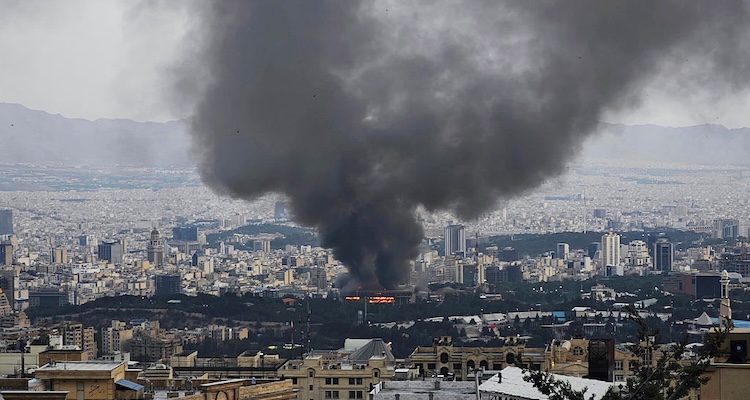
The Mossad also appears to be back at work in Iran. Headlines now suggest that Israel is still operating inside Iran’s borders. Unexplained explosions have claimed the lives of several Iranian military figures. The regime has not yet blamed Israel. But all signs seem to point to its hidden hand.
A former senior official summed it up this way to me: “It will not be exactly the same. We may not call it the Campaign Between the Wars. But it’s very similar. I think we will see Israel claim more credit for what it does in some places. It will remain quiet in others. But the goal is the same: to keep our enemies weaker for a longer period of time and to prevent the next war until we want to launch one on Israel’s terms.”
Israeli grayzone operations are undeniably ramping up as the multi-front war quiets down. But the risk-reward calculus for Israel is now likely to vary from one theater to the next across the Middle East. Striking assets in Lebanon and Syria poses little risk right now. Neither Hezbollah nor the regime of Ahmad al-Shara appears particularly eager to fight.
The Iranian regime, however, may be up for another tussle. Should the IDF conduct operations that cross Iran’s red line—a line that is currently ill-defined—there is real risk of escalation. Interestingly, the main critique of the campaign prior to October 7 was that it was too provocative and risked igniting a major war for minimal gains. That may seem ironic in hindsight, but the risk of provoking another major conflict now is not negligible.
Air strikes on military facilities in response to the Iranian regime renewing its ballistic missile production capabilities could trigger a painful response. The regime maintains the ability to launch ballistic missiles at Israel and to strike with considerable accuracy. The Israelis need to think carefully about how and where they conduct future operations in Iran. Indeed, few Israelis relish the notion of returning to their bomb shelters for extended stays.
A different sort of Israeli campaign is likely necessary, perhaps in tandem with calibrated efforts to prevent the regime from returning to its previous strength. This additional campaign might be one in which Israel supports the Iranian opposition movement and otherwise weakens the regime from within. Psychological, political, diplomatic, economic, and other measures designed to erode the power of the mullahs would be deployed with increasing intensity. The Israelis understand that the regime must not be allowed respite after the drubbing it absorbed in June. More important, such a strategy is crucial because it offers a more enduring and non-kinetic solution to the Islamic Republic’s annihilationist ambitions. The Campaign Between Wars could never offer that.
_____________
What the return of the campaign does offer is time, and time is what Israel needs. The pager and walkie-talkie operation that cut down Hezbollah’s commanders took years to execute. The gathering of the intelligence required to take out Hassan Nasrallah in his Beirut bunker was painstaking. The forward operation that launched Israel’s “Rising Lion” campaign in Iran, too, required years of preparation.
Israel has fewer tricks up its sleeve than it had a year ago. Most of its recent feats cannot be repeated. So Israel’s war planners and spies are back to the drawing board. They will need time to prepare for the next round against Iran, not to mention other enemies.
Concurrently, Israel has a few other related long-term projects that will also require time. The reconstruction of Israel’s northern communities destroyed by Hezbollah is one. The rebuilding of the communities in the Gaza envelope is another. The revitalization of the Israeli economy, which has taken a brutal hit, is crucial. The expansion of the country’s defense industrial base is another priority identified by the Israelis, after the Biden administration withheld ordnance in 2024 and offered a glimpse into a potential future in which America does not have Israel’s back. Forestalling major conflict for several years to facilitate these initiatives will be vital for the country’s long-term health. Of course, these initiatives cannot begin until the current war ends.
As my colleague Clifford May often says, in the Middle East, there are no permanent victories, only permanent battles. The rise, fall, and rise of the Campaign Between the Wars reflect this reality. It won’t solve all of Israel’s problems. But keeping Israel’s enemies weak and buying time would constitute a major achievement after the grueling war Israel has endured.
Photo: Uriel Sinai/Getty Images
We want to hear your thoughts about this article. Click here to send a letter to the editor.