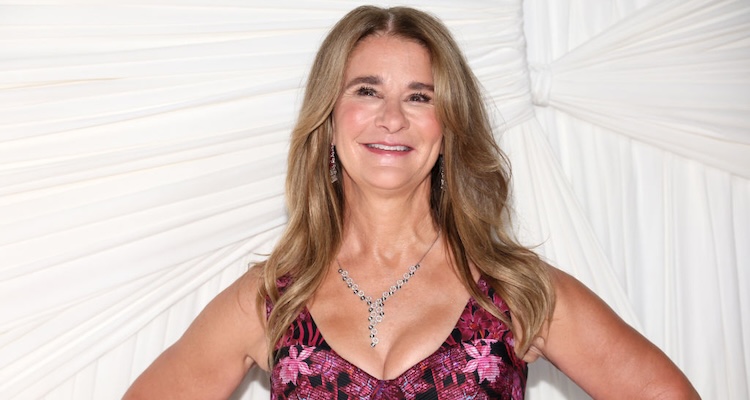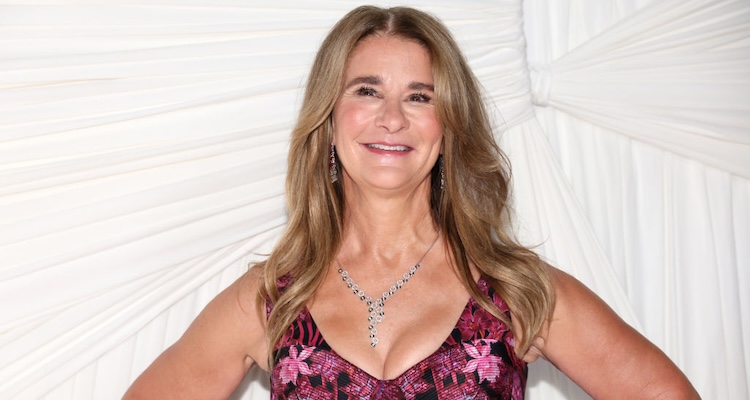
If you’re a nonprofit leader planning to read The Next Day, the new memoir/self-help book by Melinda Gates, in the hopes of finding out how she will be philanthropically doling out the $12.5 billion she got in her divorce settlement, don’t bother. There’s almost nothing substantive on that subject. Even the cover, with its lovely sprouting tree branch, its calm green accent colors and subtitle—“Transitions, Change, and Moving Forward”—makes the book seem better suited to a table in a spa waiting room than a bookshelf of anyone who is serious about influencing culture or politics.
Gates, readers will learn, had a pretty conventional and happy upbringing. Raised in a suburb of Dallas with three siblings, she went to Catholic schools and attended church regularly. Occasionally her family bristled at the strictures of their faith, as with the parish priests’ “refusal to implement the reforms of Vatican II despite the parishioners’ wishes.” Gates says this “led to my mom typing up a petition and my dad collecting hundreds of signatures for it.” She doesn’t say which reforms they were particularly interested in. But it’s clear that her family’s views about how girls and women were treated by the church were a subject of concern. When Gates was punished for wearing nail polish to school in violation of the dress code and her mother was forced to collect her in the middle of the day, her father, she says, “made clear to me that the way the priests treated my mother and me that day was intended to diminish us, to make us feel small and unserious, to reinforce a power hierarchy that placed us at the bottom.”
I can’t claim to know Gates’s father better than his daughter does, but it’s rare to find men born in Louisiana in the 1930s who worried about a church’s “power hierarchy.” What is clear is that, like many fathers of daughters, he supported her ambitions, buying an Apple III computer and encouraging Melinda and her sister to learn to code. She also says he set an example by hiring women to be on his teams. She says he “noticed that any time he was on a team that included a woman mathematician, that team was stronger and better for her contributions.” The fact that it was extraordinarily difficult for a woman to succeed in the field at the time probably made it more likely that the ones who did were actually more qualified, but Gates does not bother with such mildly controversial observations.
She attended Duke and worked very hard. While she had moments of doubt in college, she says, “my father had sent me to college with a gift more valuable than any typewriter: a belief in my own potential.” Gates got a job with Microsoft soon after graduation. Whatever her feminist streak, she has always been clear that her dream in life was to be a mother. Indeed, it seemed to come as a relief to her when she could truly embrace that role.
First, she gained a lot of weight when she got pregnant: “To me that weight was the external projection of something I began feeling the very second I saw the plus sign on the pregnancy test: freedom.” Most people don’t find pregnancy as liberating, but for Gates it was “freedom from perfectionism, from the crushing relentless societal pressure to look a certain way.” Oh, and also freedom from her job, which she promptly quit: “I decided to leave Microsoft almost as soon as I got pregnant…. I was going to love being a mother and I felt very lucky to be in position to do it full-time.” Because of her husband’s demanding responsibilities, she writes, she “wanted to make sure this child (and any future children) would have at least one parent who aimed to be as present for them as my mother was for me.”
This is one of the few times in The Next Day that Gates makes explicit the connection between her personal experiences and how she uses her philanthropic influence. “I think it’s a great injustice in our society that not every parent gets the chance to step away from work after a baby’s birth,” she writes. She has been an advocate for universal paid leave because “being able to focus on a new baby should be a right, not a privilege.”
_____________
Perhaps it is because Gates is so focused on her own personal story that her philanthropic aims seem so conventional. When the Bill and Melinda Gates Foundation launched more than 25 years ago, its focus was on increasing childhood vaccines in Africa, curing malaria, and preventing AIDS. There have been many critiques of the way the foundation has gone about its tasks. Some have argued, for instance, that the foundation has thrown so much money into various fields that it has stamped out other approaches to the problems it addresses. But the goals were ambitious and the plans were meticulous. They had on them the stamp of an entrepreneur.
Melinda Gates, on the other hand, has put together a list of utterly mundane goals. Her new foundation, Pivotal, “focuses on dismantling barriers that hold people back, with a particular focus on women, especially women of color.” Why women of color? She doesn’t say. Which barriers? Well, it could be anything, but legal restrictions on abortion are clearly high on the list. She is outraged after “watching women’s rights rolled back.” She will not “accept the idea that my granddaughters could grow up with less freedom than I have.” Her goals include getting women more access to abortion, diversifying the workplace, and “partnering with a diverse group of global leaders.”
In order to figure out what to do, she is “seeking out people with lived experience of the issues I care about and being open to following them where they lead me.” That’s why, in the book, we hear from the likes of Michelle Obama, Oprah Winfrey, and Ava DuVernay. If she’s looking for the perspective of wealthy black female celebrities, Melinda Gates definitely has things covered.
Of course, basing policy or philanthropic decisions on “lived experience” (also known simply as “experience”) is really just a way of saying data should take a back seat. Listening to lived experience means listening to anecdotes that have often been handpicked by advocates with a particular agenda. So it’s not surprising that Gates has wound up giving to many already well-endowed organizations, from the Aspen Institute to the New America Foundation—groups that claim to lift up these voices of lived experience.
And it won’t be surprising when she finds out, eventually, that this money could have just as effectively been dumped into the ocean. A little over a year ago, she said that it is “important to place trust in the people and organizations we partner with and let them define success on their own terms.” Philanthropists like Gates and Mackenzie Scott (the former wife of Jeff Bezos) have been proponents of the idea that racial justice should mean that grantees, not grantors, decide whether anything has been accomplished (and presumably whether their grants should be renewed).
But Melinda Gates does a poor impression of someone with radical ideas. Her platitudes (which really could have been written by ChatGPT) include the conclusion that “what matters most is not what happens to us, but how we respond to those events, both in the moment and, really quite importantly, on the next day.” She goes on: “Because what we do on the next day is what makes us who we are and how we make our lives our own.”
In a blog post from 2023, Bill Gates asked an important question: “Why create a foundation in the first place?” He wonders: “Would it have been better to donate the money directly to existing groups?” He said that “the most effective way to solve…more of the world’s problems…was to build a new organization with people from the public and private sectors who know how to get new tools invented and delivered.”
In today’s world of philanthropy—dominated by rhetoric about the need for more radicalism—this kind of pronouncement sounds very unexciting. Whatever the personal foibles of her husband—and Melinda does not go into any detail about their relationship, just in case you were wondering whether there might be anything even remotely interesting about this useless volume—he is the one who seems to have a vision for how to make a difference with his wealth.
Photo: Dia Dipasupil/Getty Images
We want to hear your thoughts about this article. Click here to send a letter to the editor.