World War I began in the summer of 1914 with the thunder of galloping horses, and yes, I promise this column will be about show business. Along the Western Front, the forces of France, Germany, and Britain included more than 200 cavalry regiments, each with its own retinue of veterinarians, saddlers, farriers, and stable hands. Cavalry was a gloriously impractical way to fight a modern war, and within weeks, those notions of 19th-century military glamor met the devastating rifle, machine-gun, and artillery killing machines of the 20th century.
Again: I swear to you that this is about Hollywood.
By the autumn of 1914, trench warfare set in and mechanized firepower dominated, and it was clear that the glory days of the noble warrior steed had passed. The tactics and traditions of sabers and men in fuzzy hats proved painfully anachronistic amid the relentless modern slaughter. The bloody battlefields of Audregnies and Frontiers, especially, were charnel houses of horses and horsemen alike, with the corpses of both lying in an unholy and grotesque tangle.
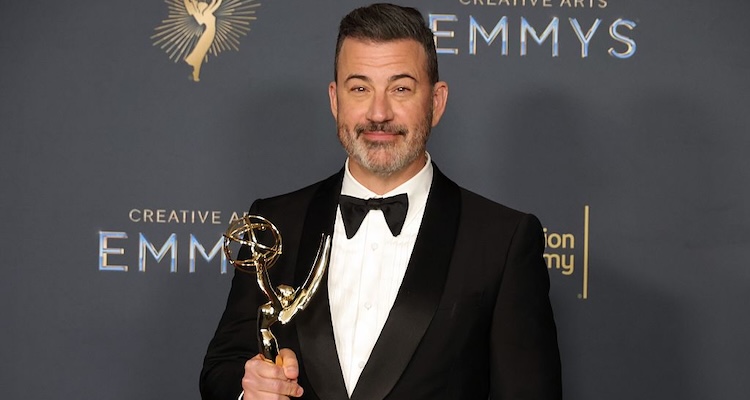
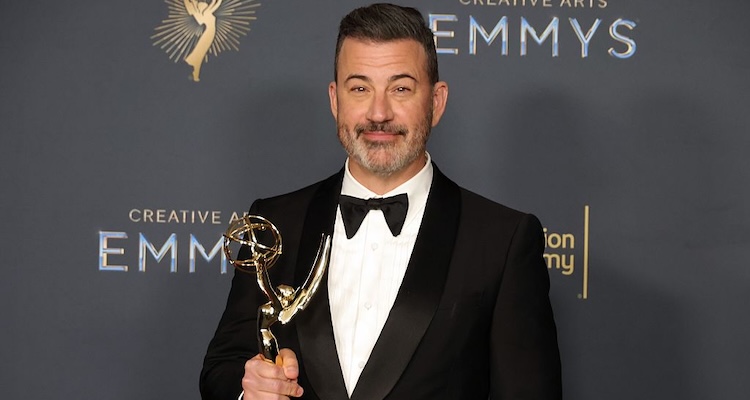
And that brings us to Jimmy Kimmel.
See? I told you it was about show business.
When Jimmy Kimmel was removed from the ABC broadcast network airwaves a few weeks ago, and then returned after a tense weekend of White House insults, online squabbling, and behind-the-scenes corporate intrigue, it was clear that late-night television talk shows—the proud and profitable tradition embodied by the great Johnny Carson—were about as relevant and sustainable as a cavalry charge on the fields of 1914 France.
We all know the basic story: Kimmel made a set of callous and (to some) unfeeling remarks that touched on the assassination of political activist and conservative hero Charlie Kirk, which were then clipped and distributed—and this is a crucial detail—online, so that a lot of people who do not watch Jimmy Kimmel could watch those segments and become outraged. The angry responses came from the usual contemporary places, like Fox News and X, but they also came from a very old-fashioned, nearly forgotten quarter.
The ABC network is still a network—a collection of actual, steel-and-glass TV stations strung across the country that broadcasts its signals through coaxial cable and sometimes even through the air. Yes, still! Some of the stations belong to ABC. Those are known as “owned and operated”—the O&O’s. But most of them are independent stations that have signed deals with the network. Those are the affiliates.
Most of the verbs in the paragraph above should be in the past tense, or, at least, before the Kimmel Affair, I would have bet a lot of money that they were. But we’re at a curious time in the television business, where there is still a lot of money, and therefore a lot of leverage, in the old business model involving broadcast network affiliates. Two of the biggest station groups, Sinclair and Nexstar, own a lot of ABC affiliate stations. The O&O’s tend to be in the big cities. The affiliates tend to be in smaller, more rural areas, which means the familiar red-state/blue-state divisions apply here. Sinclair and Nexstar viewers didn’t like Kimmel’s remarks—they didn’t like him much before that, either, nor did the Trump administration. And because the Federal Communications Commission has leverage over broadcast station groups (especially during a time of mergers and consolidations), and because affiliate station groups still have leverage over their broadcast network partners, the squeeze went all the way up the chain. And Jimmy Kimmel was in trouble.
The irony here is that a lot of the outraged responses to the pressure on Jimmy Kimmel came from people who do not actually watch Jimmy Kimmel. His show—like his late-night competitors on other networks—does get a lot of attention and views from clips that float around social media platforms. A lot of people, in other words, “watch” old-timey broadcast television in the most modern way there is—on their phones, while scrolling through TikTok. A further irony is that many people subscribe to social media accounts specifically because those accounts search and serve up outrageous remarks made on other platforms. The Jimmy Kimmel Affair was a kaleidoscope of time-bending components—old-line broadcasting, online audiences, with the new economics of Hollywood meeting the old salaries of yesteryear.
And the real reason this anachronistic, late-20th-century leverage worked at all is because Kimmel—and his colleagues at the other big networks, Stephen Colbert and Jimmy Fallon—are still paid like it’s the old days. They each earn, roughly, about $15 million a year. Those shows cost, on average, about $120 million per year to produce. Don’t ask me why it’s so much. No one really knows. But with budgets this high, no network can afford to take a show off its broadcast schedule. No network can really afford to tell Sinclair and Nexstar to buzz off.
This is back-of-the-envelope, very rough math, but when you calculate that only about 5.4 million viewers form the combined audience for the Big Three network 11:30 talk shows, and they cost about $360 million to produce, you can start to see why Jimmy Kimmel seems a little like General Jean-François André Sordet, commander of the French cavalry corps, riding into battle like some relic from another time. Everyone else on the battlefield of show business is gutting their way through brutal cutbacks, production collapses, with profit margins and business models hacked and sliced to pieces by the relentless modernity of unlimited bandwidth and streaming-service economics. But for some reason, there are still three grandees in fuzzy hats riding into the battlefield like it’s still 1995.
I was working on a show years ago, and one of the episodes turned out…well, let’s just say it wasn’t one of our best, and so we were faced with a decision: When should we air it?
Do it in December, an executive told us, sometime Christmas week. Low HUT levels, he said—HUT, by the way, is a heartbreakingly anachronistic anagram for Households Using Television, back when we said that households were “using” television instead of streaming content, back when families watched the same show on the same television set, back when we were all in the show-business cavalry, marching proudly in our uniforms.
Let’s bury it in December, he said. We’ve got to put something on then, may as well be this episode.
Oh well!, we thought. Those low HUT levels are a godsend! And it never occurred to us, or anyone, that “low HUT levels” would soon be permanent. In the intervening years, of course, it’s been made clear to everyone. Well, everyone but Kimmel, Colbert, and the other guy.
There is no particular reason, by the way, that a late-night talk show can’t be reasonably popular and economically successful. It’s an audience-appealing category, and that hasn’t changed. But at $120 million a throw, that’s simply not going to happen. And as long as late-night talk shows—and a lot of other corners of the entertainment business—are produced with budgets of the glorious past, the merciless economics of the present are going to continue to deliver expensive and brutal lessons. Lessons to them—and the horse they rode in on.
Photo: Kevin Winter/Getty Images
We want to hear your thoughts about this article. Click here to send a letter to the editor.