For the American left, the high point of 20th-century America has to be the period between the Great Depression and the end of World War II. At first glance, this was a particularly dark, even regressive, time, dominated by a deep economic downturn with high unemployment for years on end, as well as a major international war that saw some 600,000 Americans losing their lives. It was also a period of Jim Crow segregation and stubborn anti-Semitism at home. And, of course, the world saw the genocidal actions of the Nazis and their allies kill some 6 million Jews.
And yet, for all of the darkness, the left remembers the time fondly. The reason, even if the younger among them do not know it, is the concept of the Popular Front, which was at its strongest then. Put simply, the main idea of the Popular Front is “no enemies to the left.” Popular Front politics consists of a coalition of traditional liberal groups, combined with more radical leftists and even Communists, whose common goals include an enlarged social democratic welfare state and expansion of the public sector, strong organized labor, and limits on the power of business. Popular Front politics also explicitly organizes itself along “anti-fascist” lines, not just against anti-Semites and reactionaries, but against any kind of “rightist” politics.
This Popular Front is the animating theme of the historian Mike Wallace’s Gotham at War: A History of New York City from 1933 to 1945, which marks the third volume in his popular epic narrative of the city’s history (the first book was co-written with Edwin Burrows). The text of Gotham at War clocks in at almost 900 pages, all to describe just 12 years of history. With 168 chapters, most of them no more than a few pages long, Gotham at War feels a bit like an encyclopedia and could have used some editing—yet it’s an engaging and lively narrative.
Despite the time frame, the book is mostly focused on World War II and how the war affected both the city and country. The war put an end to America First isolationism and Father Coughlin–inspired Christian Front anti-Semitism. It knitted together a coalition of what Wallace calls “Fighting Liberals” and “Wall Street Warriors,” so many of them New Yorkers, devoted to winning the war.
During the First World War, some liberals had looked with great anticipation at the “social possibilities of war,” as John Dewey once wrote. Things did not quite turn out that way, but World War II offered new possibilities. “Roosevelt was calling for expanding New Deal–style social democracy at home and extending it on a global scale,” Wallace writes, “for launching a simultaneous and mutually reinforcing crusade against domestic illiberalism at home and international fascism.”
Harnessing government for larger social ends became more of a reality. Nationally, the Office of Price Administration instituted a thoroughgoing system of price controls, giving the federal government a strong stick to use against recalcitrant businesses. In New York, social democracy meant large-scale urban planning and public-works projects, “slum clearance,” and rent control. Although the war had turned FDR from “Dr. New Deal” to “Dr. Win the War,” the Popular Front crowd hoped the war would spur a second New Deal, not just at home but abroad, whose outlines can be seen in the Atlantic Charter and FDR’s Second Bill of Rights.
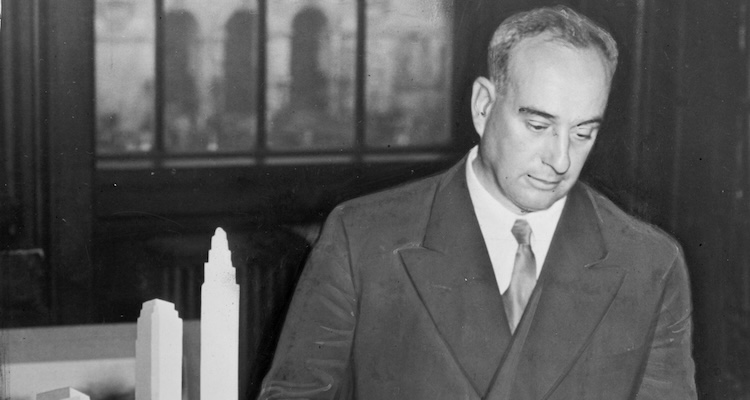
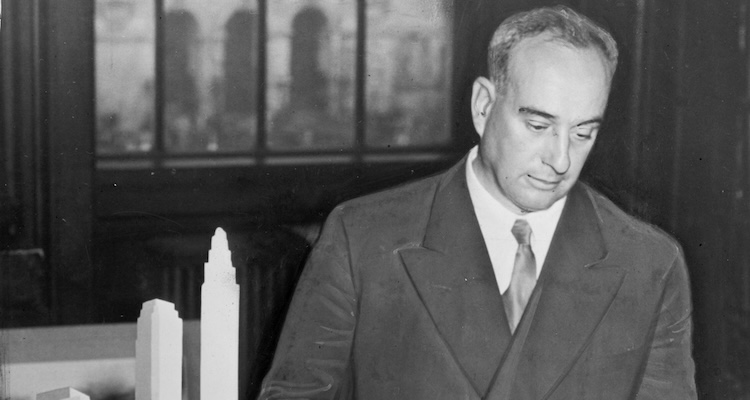
Gotham at War bathes in nostalgia for the period during which America would win its war against fascism and Japanese imperialism. The country emerged from the Great Depression thanks in large part to war production that set the stage for postwar economic prosperity. New York City benefitted from much of that economic activity, and, under the leadership of Mayor Fiorello La Guardia, master builder Robert Moses helped to rebuild the modern city with highways, parks, playgrounds, public housing, and other public infrastructure. New York was also a leader in the integration of immigrants into the American mainstream and the push for tolerance and cultural pluralism. Émigré academics filled American universities, while émigré artists helped make New York the center of the world of modern art. Musically, this was the era of Charlie Parker’s bebop, Leonard Bernstein, the crooning Frank Sinatra, and Rodgers and Hammerstein.
_____________
Wallace, longtime editor of the Radical History Review, has never hidden his left-wing inclinations. He takes a dim view of capitalism and believes in the need for a strong state to limit the power of business. He too often gives the benefit of the doubt to Communists and other radicals and sees anti-Communists as a much graver threat to the country.
For instance, he devotes two pages to the unfortunate tale of Simon Gerson, “a bright and articulate” young reporter for the Communist Daily Worker who was appointed to the staff of Manhattan Borough President Stanley Isaacs, a liberal Republican, in 1937. Anti-Communists, led mainly by Catholic groups, attacked Gerson’s appointment, and in response the New York State Legislature passed a bill banning from state employment anyone advocating the overthrow of the government. Gerson ended up resigning his post. Wallace portrays Gerson as a victim of early “Red baiting,” but what goes unsaid is that Gerson retained his fidelity to the Communist Party for decades to come and eventually became the campaign manager for Communist Gus Hall’s 1980 president campaign. Maybe the pesky anti-Communists that Wallace disparages were on to something back in the 1930s and 1940s.
Yet there is so much fascinating history in Gotham at War that one can forgive its biases. Wallace does point out some of the problems with the Popular Front, especially when Communists turn on a dime from being belligerently anti-fascist in the late 1930s to becoming peacenik isolationists after the signing of the peace treaty between Nazi Germany and the Soviet Union. Though his discussion of the Spanish Civil War is too simplistic, Wallace rightly notes that the Communist Party “had undermined its appeal in supporting Soviet actions many found incomprehensible or reprehensible.”
A grave weakness of the book is Wallace’s lack of interest in the lives of non-leftist New Yorkers. This is true especially of the city’s middle- and working-class Catholics, who made up around 40 percent of the city. In the mid-20th century, New York was a Catholic city. The Church, under Archbishop Francis Spellman, Tammany Hall, and AFL unions, dominated the city’s politics and civic culture—but Catholics play, at best, a minor role in Gotham at War.
The group that drives much of the book is Jewish New Yorkers. During World War II, Jews constituted almost a quarter of the city’s population. Though Catholics still dominated the city’s politics, the New Deal made it clear that Jews were an integral part of the Democratic coalition and played an outsize role in the left-liberal politics of the Popular Front. Catholics had been strongly isolationist, while Jews, for obvious reasons, had taken a leading role in speaking out against the Nazis.
Conflicts between Catholics and Jews would be largely papered over during the war, but the contours of postwar politics would soon become apparent. Jews, along with Protestant New Yorkers, made up the reform movement that tried to wrest control of the Democratic Party from the political machines. Jews would also play a central role in the fight over separation of church and state, a battle aimed directly at the power of the Catholic Church. Catholic dominance of New York politics would end by the 1960s, with the decline of Tammany Hall and the decline in Church authority in the wake of Vatican II.
_____________
Gotham at War ends with the permanent placement of the United Nations in New York, yet it also ends with a cliff-hanger to which readers already know the answer. Whose vision will win out in terms of planning the postwar nation and city? Wallace breaks the contestants into three groups: left-liberals, corporate liberals, and “economic fundamentalists,” or conservative businessmen. The Popular Front saw the alliance of the first two groups in defense of the New Deal and the war, but the postwar world would be different. Instead of allying with the hard left, liberals turned toward the center and made alliances with moderates to support “growth liberalism” at home, a belief that a strong private sector would produce enough economic growth to fund a moderate social welfare state. Abroad, this coalition focused on the policy of containing Soviet Communism and advocating an active role for America in the postwar world.
The economic planning of the New Deal and war years subsided, and the dream of the Popular Front crumbled. Former Vice President Henry Wallace, the epitome of Popular Front politics, would receive only 2 percent of the vote while running on the Progressive Party ticket in the 1948 presidential election. The wartime alliance with the Soviet Union ended, replaced by an anti-Communist crusade to contain the Red menace. How it all went wrong, in the eyes of the left, will no doubt be the subject of Wallace’s next volume, if the 83-year-old historian is able to produce another book.
Gotham at War provides some clues as to whom Wallace blames for the demise of the wartime Popular Front: “McCarthyite” Catholic anti-Communists, “business fundamentalists,” Robert Moses, craven liberals, and racial bigotry. Yet the story of postwar New York and postwar America is so much more complicated than that! It would be quite a heavy lift to argue that a continued Popular Front in the years after World War II would have produced a stronger and more prosperous city and nation.
In our own time of Antifa gangs and the possibility of a Mayor Mamdani in New York, liberals face a choice. Do they pursue an updated version of the Popular Front and ally with—and make excuses for—the far left in the name of fighting what they see as the “fascism” and “authoritarianism” of the right? Or do they turn toward the center and marginalize the left in the hopes of building a moderate vision of liberalism that appeals to a broader range of Americans and eschews violence and extremism? Interestingly, the Popular Front of the 1930s and 1940s fought vigorously against anti-Semitism, while modern anti-Semitism seems to have found a new home within the contemporary left.
Conservatives can also learn lessons from Gotham at War. America’s victory in World War II and its emergence from the Great Depression and the beginning of the postwar prosperity occurred during a period of activist government. New York City was not a libertarian utopia. The real history of New York City in real time, however, does not provide a strong argument for expanding the powers of the state. Pulling back from central planning and an aggressively activist government after the war—much to the chagrin of the author—did help drive postwar prosperity. Still, while limiting the expansionist tendencies of the left should remain a central goal of conservatives, learning to use the government that still exists for conservative ends is something those on the right should keep in mind.
Photo: C.M. Stieglitz, World Telegram staff photographer – Library of Congress. New York World-Telegram & Sun Collection.
We want to hear your thoughts about this article. Click here to send a letter to the editor.