Classical liberalism rests on a deceptively simple premise: Humans flourish best when left largely unfettered by the state. The philosophy’s core principles form the backbone of political freedom and economic growth in the West. Adherence to its values has yielded astounding increases in prosperity and personal autonomy.
Today in the United States, the label “liberal” has veered far from its roots. The term is now used to describe everything from social-democratic largesse to technocratic management of the economy. Worse, the classical-liberal commitment to individual liberty is beset on all sides—by the left’s zeal for regulatory paternalism, and by the populist right’s enthusiasm for wielding state power against perceived cultural enemies. Both threaten to trade procedural freedoms and open debate for dogma and control.
As a result, if ever there was a time when classical liberalism needed a robust, unapologetic defense, this is it.
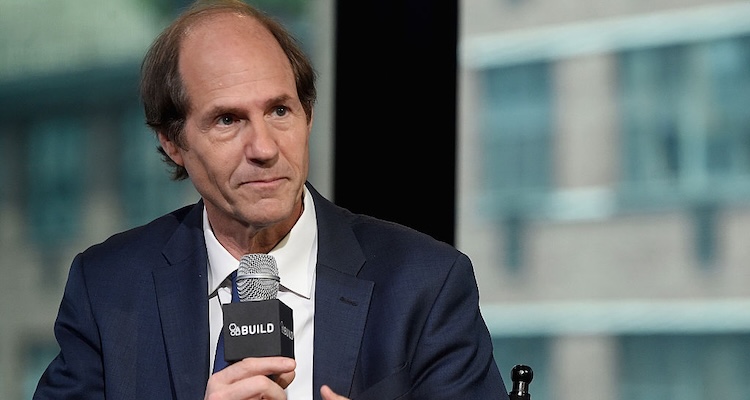
Cass Sunstein seems an unlikely candidate to accept this challenge. Throughout the Obama years, Sunstein served as the administrator of the Office of Information and Regulatory Affairs. While there, he embraced the expansion of federal administrative power, backing rules based on dubious cost-benefit analyses and promoting interventions designed to shape American behavior in the direction he and his colleagues deemed optimal.
But accept the challenge he does, in his most recent book, On Liberalism: In Defense of Freedom. The resulting work is ambitious in scope but flawed in execution, as Sunstein attempts to smuggle progressive governance principles into classical liberalism’s intellectual framework. The text contains much that is sensible. Sunstein’s diagnosis of modern political dysfunction is accurate. He identifies the threat posed by censorious progressives who have abandoned commitments to free speech and pluralism in favor of tribal identity politics and ideological orthodoxy. He also highlights the danger from illiberal forces on the right who would use state power to enforce their vision of the common good, whether through protectionist trade measures or constraints on cultural expression.
Sunstein’s strongest moments come in the first chapter, which he calls the “heart of the book,” adapted from a “manifesto” that appeared in the New York Times. The remaining chapters are also derived from earlier writings. Some of these sources are at most tangentially related to the book’s subject. As a result, his declared goal of “producing… a relatively unified text” from previously published work is only sporadically successful and a bit factitious.
The manifesto contains 85 propositions. The first identifies six beliefs he declares all liberals value: “freedom, human rights, pluralism, security, the rule of law, and democracy.” Subsequent propositions identify other tenets of classical liberalism, including the primacy of individual dignity, the necessity of freedom of expression and viewpoint diversity, and the importance of free markets and private property rights.
While Sunstein demonstrates a sophisticated understanding of the Enlightenment tradition, he insists on having it both ways. He identifies as a champion of individual worth and free choice, but advocates policies that regard ordinary citizens as children who cannot be trusted to decide for themselves.
For example, in one proposition, Sunstein acknowledges that “liberals prize free markets” as “an important means by which people exercise their agency.” But he immediately pirouettes, claiming in another that many liberals “downplay the centrality of free markets” and champion intervention to safeguard individuals from “harms” they would choose to inflict on themselves. These “liberals” might applaud, as an illustration, former NYC Mayor Bloomberg’s crusade against Big Gulps, which treated adult consumers as incapable of making well-advised decisions when buying soft drinks.
Sunstein’s willingness to meddle in markets goes beyond interventions designed to protect individuals from self-imposed harm. Implausibly asserting that most liberals “do not regard freedom of contract as sacrosanct,” he argues for all manner of restrictions on consensual human exchanges. Consider his tortured logic on minimum wage laws, which restrict the freedom of both employers and workers, prohibiting the unemployed from working for wages they might eagerly accept. Sunstein maintains that these laws are somehow liberal because they do “not super-impose regulation on a realm of purely voluntary interactions, but merely substitute one form of regulation for another.” He blithely equates (liberal) legal frame works that defend uncoerced exchange and (illiberal) government mandates that override the terms parties would freely negotiate.
His treatment of property rights is similarly nonsensical. Sunstein includes a proposition declaring liberals place significant value on pro-perty rights, believing them to be “exceedingly important” because they provide freedom, security, and independence. But again, Sunstein spins, classifying broad government redistributions of wealth and other moves toward socialism as “liberal,” even though these actions necessarily confiscate private property. This doesn’t add up. If property rights matter deeply, major violations of those rights cannot be considered part of the liberal tradition.
Sunstein contends liberals can back government paternalism, Lyndon Johnson’s Great Society, the contemporary administrative state, and other regulatory apparatus, all of which classical liberals find abhorrent.
The problem isn’t hypocrisy. It’s intellectual confusion. Sunstein appears unable to perceive the contradictions between his stated principles and his preferred policies. These contradictions permeate the book.
_____________
Following his manifesto, Sunstein continues with an extended discussion of John Stuart Mill’s concept of “experiments in living.” Mill observed that, because humans are imperfect, they have a wide variety of opinions. As a result, “there should be different experiments of living,” and “free scope should be given to varieties of character.”
Mill understood that diverse approaches to life benefit both the individual and society as a whole. People learn from their own choices, even (or perhaps especially) when those choices are unconventional. Equally important, they gain insight by observing others’ experiments, which can offer new models of human flourishing or serve as cautionary illustrations of paths better avoided. This diversity of experience, Mill argued, acts as “the chief ingredient of individual and social progress.” To safeguard this right to experiment, Mill articulated his “harm principle,” asserting that “the only purpose for which power can be rightfully exercised over any member of a civilized community, against his will, is to prevent harm to others.”
Sunstein claims to embrace Mill’s “experiments in living” philosophy but dismisses the “harm principle,” proclaiming that one “should have no trouble with laws that require people to buckle their seatbelts … or to save money for retirement.”
Mill conceived the “harm principle” not as a suggestion (as Sunstein sees it) but as a bulwark against paternalistic meddling by the state. Mill believed that the government has no business protecting competent adults from their own selections, however foolish they appear.
Sunstein asserts we can distinguish between “genuine experiments of living,” which should be guarded from state interference, and decisions that “clearly lack that character,” which are fair game. Sunstein never supplies the criteria for determining which decisions deserve protection and which do not, perhaps because the task is impossible.
The determination of how much to save for retirement may strike Sunstein as insignificant, but it represents something profound: the right to make one’s own judgments about risk and consumption preferences, and the appropriate relationship between citizen and state.
Sunstein further reveals how far he has drifted from Mill’s views in his discussion of whether a majority should be able to override the right to experiment. He proposes a concept he calls “experiments of living constitutionalism,” a method of constitutional interpretation that is deferential to “democratic processes.” According to Sunstein, “if Congress or a state legislature has made a reasonable decision, supporters of experiments of living constitutionalism might well be cautious before rejecting it. You can believe in an experiment of living without being a fanatic.”
Sunstein misses the point of constitutional rights, which is to defend minority activity against tyrannical majoritarian override. These protections should shield experimentation from democratic interference, not defer to it. There is nothing fanatical about this.
Sunstein’s confusion extends beyond personal liberty to economic freedom. The classical-liberal tradition holds economic liberty not just instrumentally worthwhile but as a valuable end in itself. Interference with economic liberty directly violates the individual’s dignity as a self-governing moral agent.
Ignoring this essential insight, Sunstein dismisses economic freedom as “a presumption” that can be “overcome” by findings in behavioral economics. He argues that cognitive biases cause people to make economic decisions that work against their interests, thereby justifying wide-ranging government intervention in these decisions.
Sunstein’s diagnosis rests on a shaky foundation. Behavioral eco-nomics literature is plagued by publication bias and methodological flaws that have led to a devastating “replication crisis,” the systematic inability of others to reproduce published findings. Rather than evidence-based policy, Sunstein relies on policy-based evidence, his predetermined regulatory preferences leading to after-the-fact “scientific” justification.
Sunstein’s remedy is no better founded. He calls for “behaviorally informed regulators” who “nudge” people toward superior choices through carefully designed “choice architectures.” When gentle nudges prove insufficient, Sunstein endorses outright “mandates and bans.”
Nudge theory, which Sunstein developed with Richard Thaler, presumes that enlightened experts can identify optimal life choices for millions of strangers and then guide them toward predetermined outcomes. Sunstein’s confidence in this ability runs counter to Friedrich Hayek’s essential insight about the limits of central planning. Planning fails not from ill intentions but from planners’ inability to access the dispersed and rapidly changing knowledge required for intelligent decisions about complex social systems.
Of course, human beings sometimes choose paths they later regret. But government representatives face the same cognitive biases and incentive problems as everyone else, yet they lack access to the local knowledge people possess about their own circumstances, preferences, constraints, and opportunities. In the absence of this information, how can these representatives be better at determining optimal choices than the affected individuals?
Untroubled by this question, Sunstein’s faith in experts remains unshaken by decades of policy failures, from urban renewal to Covid lockdowns to the homelessness crisis. He fails to grasp that classical liberalism’s genius lies not in assuming perfect human judgment, but in designing institutions, such as competitive markets and property rights, that channel imperfect choices toward beneficial outcomes better than experts can.
Furthermore, by manipulating decision contexts while preserving the illusion of choice, nudging violates the principle of informed consent that should govern citizen-government relations. It’s coercion with a smile, allowing paternalists to avoid the uncomfortable label of authoritarianism.
Long ago, Milton Friedman identified the primary driver of the interventionism Sunstein advocates:
A major source of objection to a free economy is that it gives people what they want instead of what a particular group thinks they ought to want. Underlying most arguments against the free market is a lack of belief in freedom itself.
_____________
Sunstein envisions “liberalism” as a broad and inclusive political tradition. In fact, he considered titling his book “Big-Tent Liberalism.” His conception is so inclusive, it encompasses figures most would deem ideological adversaries. To Sunstein, “James Madison, Alexander Hamilton, Franklin Delano Roosevelt, Winston Churchill, John F. Kennedy, Lyndon Johnson, Ronald Reagan, Margaret Thatcher, and Angela Merkel all count as part of the liberal tradition.”
Endeavoring to create a coalition spanning from Reagan Republicans to Roosevelt Democrats disregards irreconcilable disagreements. Reagan had a deep skepticism of government and a firm belief in the ability of free markets and civil society to solve societal problems. Roosevelt had the exact opposite conviction, seeing comprehensive government intervention as necessary to address market failures and societal inequities. Reagan liberals favor deregulation and tax reduction. Roosevelt “liberals” champion expansive welfare programs and increased government intercession. These positions do not evolve from a shared framework. They represent incompatible visions of the state’s role in society that no amount of definitional creativity can merge.
To fit his preferred interventionist views into the classical-liberal oeuvre, Sunstein has stretched the concept beyond coherence. If the term “liberalism” embraces both Reagan’s deregulatory agenda and Roosevelt’s New Deal expansion, both Hayek’s spontaneous order and Rawls’s redistributive justice, both support for and opposition to the administrative state, federalism, the free market, and property rights, it ceases to function as a meaningful analytical category. He describes not a political philosophy but an empty receptacle into which any Sunstein-approved policy can be poured.
Sunstein would no doubt disagree, arguing that shared procedural commitments to freedom, pluralism, and the rule of law can unite people across vast substantive disagreements. But he gives the game away in his longest chapter, an unsuccessful attempt to build the case that FDR’s Second Bill of Rights—proposed in his 1944 State of the Union message—is “part of the liberal tradition.”
To make this claim, Sunstein redefines liberty to mean entitlement to adequate income, housing, medical care, education, and protection from financial fears. This recharacterization shifts the government’s role from protecting voluntary exchange and private property rights to guaranteeing specific outcomes, thus subjugating individual sovereignty to collective welfare.
Struggling to square the circle, Sunstein argues that the Second Bill of Rights was “an attack, liberal in nature, on the whole idea of laissez-faire—a suggestion that government and coercion are not opposed to human liberty, but in fact are necessary to it.” But coercion and liberty are irreconcilable. They are literal opposites. Classical liberalism necessarily accepts the limited use of state power to defend individual rights from infringement by others. Sunstein’s approach inverts this principle, employing government coercion as an offensive tool to redistribute resources according to his vision of what citizens deserve. This transforms government from a guardian of liberty into a threat.
Sunstein insists with a straight face that “Roosevelt’s emphasis on freedom should be underlined. He was a liberal.” Even Sunstein appears to realize that this claim is a stretch, because he also acknowledges that
America’s public institutions were radically transformed under Roosevelt’s leadership. Under New Deal liberalism, the federal government assumed po-wers formerly believed to rest with the states. The presidency grew dramatically in stature and importance; it became the principal seat of American democracy. A newly developed bureaucracy, including independent regulatory commissions, was put in place.
Sunstein must recognize that FDR’s expansion of executive authority and the administrative state came at the expense of individual liberty and democratic institutions. A random sampling:
Roosevelt’s imposition of New Deal mandates on businesses and consumers mirrored the centralized planning of corporatist states. His authoritarian attempt to pack the Supreme Court was designed to undermine judicial independence and validate illiberal rules previously found unconstitutional. His administration’s prosecution of Americans advocating nonintervention during World War II and use of federal agencies to pressure critics constituted a blatant assault on free speech rights. And his interring of Japanese Americans during that war stripped citizens of their most basic freedom.
These policies, which were core rather than ancillary to FDR’s program, cannot remotely be considered liberal, at least not in the classical sense.
_____________
Per a 2025 Cato Institute/YouGov survey, a staggering 62 percent of U.S. adults under 30 now hold a “favorable view” of socialism. Over a third look kindly upon Communism. A 2025 Heartland Institute/Rasmussen Reports poll discovered that 76 percent of likely voters under 40 support nationalizing major industries. A majority hopes that a democratic socialist (that’s right, someone from Zohran Mamdani’s party) will become our next president. Meanwhile, the Yale Buckley Institute’s 2025 National Undergraduate Student Survey revealed alarming attitudes toward free speech among American undergraduates: Almost half agree it is sometimes acceptable to shout down speakers, 39 percent consider violence to be justified to silence “hate speech,” and one-third think offensive speech should be criminally prosecuted.
These are not the preferences of a free people. They are the reflexes of ill-informed subjects-in-waiting.
In an era when classical liberalism faces existential threats from both left and right, we need clearer thinking, not clever redefinitions. A classical-liberal response to our predicament would begin with humility about what government can and should endeavor to accomplish. It would recognize that the primary threat to human flourishing comes not from insufficient expert guidance but from the concentration of power in institutions that lack knowledge, proper incentives, and effective accountability mechanisms.
Such a liberalism would embrace free markets not because they are flawless but because they are more responsive to individual preferences than centralized alternatives. It would shield free speech not because all speech is valuable but because censorship inevitably empowers the wrong people. It would defend federalism not because states are inherently virtuous but because decentralized decision-making allows for experimentation.
To survive, classical liberalism needs defenders who understand the difference between sincere respect for individual autonomy and paternalistic concern for optimal outcomes. As On Liberalism makes clear, the man who wants to “nudge” us all into conduct he thinks best is profoundly ill-suited to defend a tradition built on individual freedom. Indeed, he betrays it.
Photo: Jamie McCarthy/Getty Images
We want to hear your thoughts about this article. Click here to send a letter to the editor.