Everyone who has ever tried to start a car that doesn’t want to start has heard the same thing from the people standing nearby.
You turn the key, you pump the gas, the car rumbles and rumbles and doesn’t turn over, and the dialogue from the spectators never varies.
Half of them shout, “You’re flooding it.” And the other half shout, “You gotta give it more gas.” There’s something about standing near someone else and watching as they try to do something difficult that brings out the inner McKinsey consultant in all of us.
I met a guy once somewhere who said he was a writer. This happens a lot in Los Angeles, but mostly the kind of people you run into who say, proudly, I’m a writer are also the kind of people who say Do you want a venti or a grande? But in this guy’s case, he wasn’t just dreaming. He had been a real writer, a paid writer, on the staff of a real television show. Which struck me as odd when he told me, because it was a comedy he worked on, and to tell you the truth, he didn’t seem all that funny.
“Oh, I wasn’t, like, a writer writer,” he told me when my facial expression gave me away. “I wasn’t, like, in there pitching away with the jokes, you know? I was more like…” And here he paused and searched for the right word, and his eyes lit up when he found it.
“I was like the thorn, you know? I was the guy who would sit in the room when everyone was laughing and getting ready to accept a story fix or a joke pitch and I’d say Whoa whoa whoa. Slow down. Would they really do this? or Is this line really funny? Every writer’s room needs a thorn, you know.”
I nodded in agreement, because a person who can say Every writer’s room needs a thorn is beyond help.
And then he added: “I haven’t worked for about seven years.”
Ever wonder why? I thought to myself but did not say.
Rarely, in fact, does someone set himself up quite so well, and pay it off quite so neatly, as “I was the thorn in the room” and “I haven’t worked in seven years.” I mean, that’s a nearly perfect joke structure, but of course the guy didn’t recognize that because the guy had never bothered to pitch a joke because the guy was too busy being The Thorn.
The job of a writer on a comedy show is to write and pitch jokes. That guy didn’t want to be a writer. He wanted to be a consultant. He didn’t want to start the car. He wanted to stand next to the guy starting the car and tell him he’s flooding it.
I don’t know where that guy is right now, but I hope he’s still in the entertainment business, because all around town it feels a lot like Thorn Season—when people in charge of studios and streamers and networks are looking for reasons to pull the plug on projects. When the number of television shows in production has shrunk but the number of executives supervising those productions has not, suddenly The Thorn is everywhere.
And often, what is happening behind the scenes in Hollywood is reflected by what is happening on the screen. The glittering, tightly controlled Hollywood of the 1930s and 1940s delivered up polished and composed comedies and dramas—often about glamorous rich people being portrayed by glamorous rich people—just as the scruffy, handheld lens-flare pictures of the 1960s and ’70s reflected the louche and hippie-infused culture of Los Angeles at the time.
It’s the same today. Cop shows, a reliable staple of television programming, have been trying to find their way in a Defund The Police, anti-cop kind of culture. Oh, sure, Hollywood is a lot less “woke” about that stuff than it was a few years ago—a city like L.A. that’s overrun with crime and homeless psychotics will have that effect—but the priorities of the progressive culture that emerged in the wake of the 2020 riots dug pretty deep into the bone. It’s hard to produce cop shows when you think cops are the bad guys.
For instance, starting a television empire like Dick Wolf’s Law & Order universe would be unthinkable today. And un-pitchable, too, in a room filled with Thorns. On Wolf’s constellation of shows, the entire premise is built on one driving need: to put the bad guys behind bars. Think of pretty much any classic cop show from the recent or distant past—Law & Order, Baretta, Hill Street Blues, NYPD Blue, The Shield, and on and on—and in every instance the story structure of each episode is about hard-bitten, flawed people trying to do a serious and specific and measurable job. To put it in dramatic writing terms, all of the characters have a clear intention. All of them, in other words, are trying to start the damn car.
The problem is that audiences love cop shows. (Audiences are often infuriatingly out of step with the prevailing progressive culture.) So if you’re running an entertainment company, you eventually have to figure out how to do a cop show that’s not about cops.
The most-watched television series in six years on the ABC broadcast network is High Potential. It garners a weekly audience of nearly 11 million viewers, which in the fractured audience environment of the television business is a genuine hit. High Potential is a show about a single mom with three kids who just happens to be a brilliant detective, which is revealed only when she rearranges some evidence on a table during her job…as the night cleaning person at the police station. It’s a nearly perfect solution to the problem. It’s not a cop show, it’s a cop consultant show. (It’s also really good.)
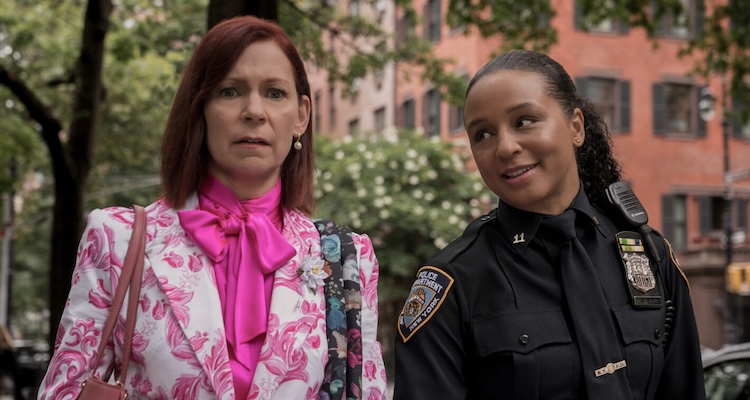
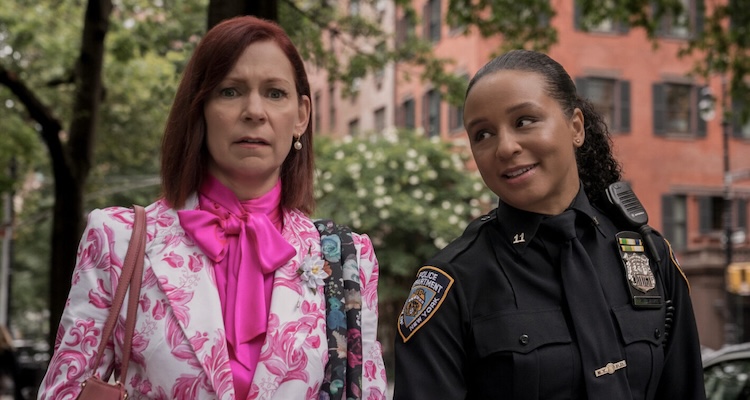
On CBS, they’re doing the same thing. Elsbeth is a funny, offbeat detective show in which the lead character is an attorney assigned by a consent decree to supervise the NYPD. Each week, she ends up meddling in an actual case in a charming Columbo-like way. The show is terrific, but again: It’s not about cops, it’s about the lawyer tasked with supervising them. It’s a show about Detective Thorn.
Broadcast television is an old dinosaur, but it’s still a terrific, money-making business and about the only place where tens of millions of people reliably tune in every week. It’s dying, but it isn’t dead yet, and its closeness to the audience and its fast production schedules make it a useful bellwether. The streaming services take years to develop and release their series. ABC and CBS can often go from page to screen in a matter of months. Which means we’ll know that Hollywood has shaken itself loose from the anti-cop progressives when we see an Elsbeth without an Elsbeth, when we see a cop show about unsupervised cops doing their jobs. That’s when we’ll know that Thorn Season is over.
A confession: I have told the story of The Thorn so many times that a good friend of mine once gave me one of the plaques people put on their desks with inspirational messages like It CAN Be Done and Altitude Is Determined by Attitude.
The plaque he gave me was just a series of capital letters: AJAFOSTFU.
A Joke A Fix Or Shut Up, but with a little something in between the “shut” and the “up.” I can imagine one of those sour, get-it-done cops on Law & Order or pretty much any cop show from the 1970s would want a sign like that, if they were somehow commingled with the cast of one of the new breed of cop-adjacent consultant Detective Thorns. I can imagine we’ve all wanted that sign, no matter what business we’re in.
Photo from Elsbeth, (2024), © King Size Productions/CBS Studios. All rights reserved.
We want to hear your thoughts about this article. Click here to send a letter to the editor.