I grew up in a leper colony, in one of the Western world’s last remaining refuges for victims of a very curious disease. Leprosy is an affliction that is almost completely removed from any contemporary context, and yet it remains to this day a potent representation of body horror, social ostracization, and biblical symbology.
I never considered my upbringing unusual because, like all children everywhere and in every time, I simply accepted the circumstances into which I was born. I possessed neither the urge nor the capacity to speculate about alternative ways of life. My primitive little settlement of Sinegorskiy in far southwestern Russia was all I knew of the world and all, at the time, I could ever hope to know. “Hope” being perhaps not quite the right word here, because it never occurred to me, or to anyone in Sinegorskiy for that matter, that we could wish for anything else in life any more than a fish in a fishbowl can yearn for the unknown ocean.
Indeed, it wasn’t until years later when I had escaped to the freedom of America that I came to understand the extraordinary circumstances of my upbringing and how they had always been intertwined with my then-hidden Jewish identity.
That understanding came in several successive waves, each shocking in its own way. Growing up in Sinegorskiy, I had always suspected that I was Jewish, in part because there were certain Russian words, especially those containing the equivalent of the English r sound, that I pronounced in a stereotypically “Jewish” way. And I was teased and harassed for it by the other children. They would ask me as a sort of bullying challenge to pronounce the nonsense phrase “Рома работа тракторист” (“Roma, work, tractor driver”) because each of these words required an alveolar trill—a rolling r sound—something I was unable to produce. Instead, I pronounced the r’s at the back of my throat as, I was constantly reminded, only a Jew would do.
The vast majority of Sinegorskiy’s residents, the non-afflicted and the afflicted alike, were non-Jewish and either Russian Orthodox or, as a consequence of the recently lapsed Soviet era, atheist. There were hints and whispers within my fragmented family that we had some Jewish roots, but this was treated by both my mother, who raised me, and by my largely absent father, who lived in another town, as a deeply taboo subject to be avoided at all costs. I didn’t understand why, at the time, this would be the case. But I was far too young and too cowed to ever question it.
As a teenager, I volunteered at the leprosy clinic (the modern term for the illness is “Hansen’s disease”), where my mother worked as a nurse’s aide and admitting clerk. My responsibilities consisted mostly of playing chess with the patients after school, keeping them company, and going to Sinegorskiy’s only grocery store to fetch them delicacies to supplement the nutritious but bland fare they were served at the clinic; they weren’t allowed to shop there themselves. The rest of the settlement, outside the clinic, had been built solely for the doctors and nurses and assorted helpers like my mother. It was, and remains, a thoroughly ordinary if extremely primitive village characterized by a sense of rampant superstition that would not have been out of place in the time of Peter the Great, though the residents complacently accepted automobiles, ATVs, televisions, and other products of modern science and technology.
The Hansen’s patients came to Sinegorskiy from all over Russia—some from as far away as Uzbekistan or Siberia, shipped, in typically Russian fashion, like cattle by means of an exhausting rail journey of 3,000 kilometers or more. (There were three other leper colonies in Russia at the time, and some of them closer to the patients’ points of departure, but post-Soviet inefficiency had the final say on such matters.) Many of the patients were Korean-Russian, descendants of refugees from Japan’s pre-war invasion of Korea. None, to my knowledge, were Jewish.
For this reason, along with my general pubescent distractedness, it never occurred to me to construct any glib parallels between these literal lepers and the fate of ostracized Jews, or to think of myself, though I was somewhat of an outcast, as a metaphorical leper. I was, after all, unafflicted by the disease—leprosy, caused by the slow-acting Mycobacterium leprae, was the very first bacterium identified as causing illness in humans and is among the least contagious of all the contagious diseases in the world. Heartbreakingly, parents of children afflicted with Hansen’s disease would sometimes attempt repeatedly to contract the illness themselves, just so they could continue to live with their children in the sanitarium.
What’s more, I wasn’t even sure whether I was Jewish at all because I was bullied for a host of reasons beyond my “Jewish” pronunciation: my scrawny frame, ragged clothes, absent father, and—a bit ironically, in light of the ravages of Hansen’s disease—for my persistent acne and stress-related cold sores. Working and socializing with the patients, who had badly deformed noses, or missing lips, or clubbed and amputated fingers caused by the destruction of nerve endings, perhaps made me, at a subliminal level, a little less conscious of my own far less serious and temporary teenage facial blemishes.
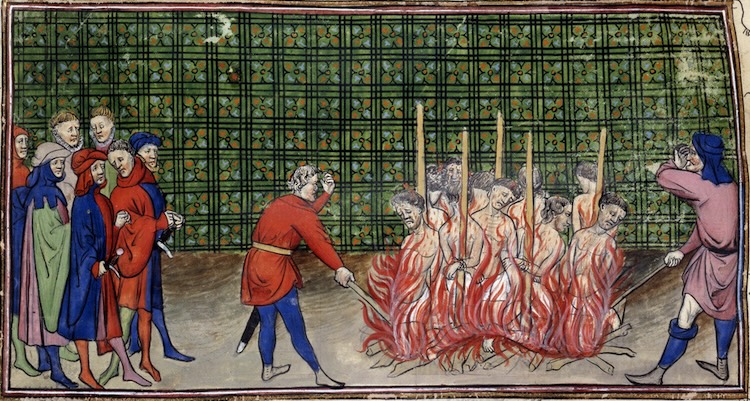
I did, however, think of my time in the clinic as a refuge and a respite. The patients, who weren’t particularly lonely—they had each other, after all—were welcoming and warm. Never once did any of them ask me to say “Roma, rabota, tractor driver.” And yet, oblivious teen that I was, it didn’t occur to me that many of them had been forcibly separated from their uninfected family members in order to live out their lives in what was essentially a quasi-prison. They couldn’t ever leave; once they became patients at the clinic, they were there for life. It was even worse at other leprosariums around the world, including one in Louisiana where at one time the facility was surrounded by barbed wire fences. In medieval times, some lepers were tortured and burned at the stake.
It did occur to me, from time to time, to wonder why Hansen’s disease patients were still (and are to this day) quarantined in sanitariums and remote colonies, even when the disease itself is negligibly contagious. There’s even a very old leper colony in a remote location on the island of Molokai in Hawaii, with only a few elderly and asymptomatic residents remaining. I wondered whether it was due to the superstitious fear of the facial deformities that the disease engenders. And yet victims of other facially disfiguring diseases, such as neurofibromatosis or Proteus syndrome, are not urged or forced into segregating compounds. The only explanation I could come up with, back then, was biblical superstition.
It was only recently, upon interviewing a National Outreach Coordinator for the U.S.’s National Hansen’s Disease Program, that I learned the real reason for the enforced quarantines: The “obligate intercellular pathogen” that causes leprosy is extremely slow-growing, meaning that in the past, patients would often go for many years undiagnosed. Meanwhile, the disease’s ravages, including decaying body parts, large skin lesions, tooth decay, and broken bones, would slowly worsen in a dramatic and visually disturbing way that has been described as “the living death.” In the days before air-conditioning and running water, that meant that the infected, often bearing weeping wounds and open sores and beleaguered by flies, became a frightening public health challenge in a way that people with noninfectious illnesses or infectious illnesses that killed quickly did not. In later years, when an understanding was achieved of the disease’s minimal transmissibility, segregation was used, rightly or wrongly, to protect the patient from social abuses, rather than the public from infection.
All this changed to a large degree in the 1940s when an America doctor, Guy Henry Faget, pioneered the use of sulfone compounds, later augmented with multidrug therapy, to effectively treat Hansen’s disease. As a result, most of the remaining leprosarium residents in the Western world, including Russia, are elderly survivors, though the disease is still prevalent in India, Brazil, Indonesia, and Bangladesh. It can also still occur in places, including the American South, where armadillos, the primary animal reservoirs of the pathogen, are eaten or where people come into contact with their droppings.
_____________
But my belated understanding of the causes of leprosy and the reasoning behind leprosariums wasn’t one of the great revelations that came in recent years.
The first of these came when, after emigrating to America and declaring political asylum, I finally took a DNA test and discovered that I was, indeed, an Ashkenazi Jew, as both I and my bullies had long suspected, and my parents had long denied.
The second was my recent discovery, in a very rare conversation with my elusive and taciturn father, that the entire settlement of Sinegorskiy, including the leprosy clinic, the homes, and the roads, had been built by his father and my grandfather, Danil Fyodorovich Bykoder. He served as engineer and general contractor of the project as a form of forced labor under the Stalin regime, this after two stints in prison camps and service on the Finnish front during the Second World War. His crimes included criticizing Stalin, being an intellectual, and being Jewish; I understood now why my parents were so reluctant to disclose their religious background.
The next revelation was my discovery, through my studies at the University of California, Berkeley of a repellent Egyptian priest who lived one century before the birth of Christ: Lysimachus of Alexandria, one of history’s earliest spreaders of anti-Semitic “pathogens.” I had been aware, of course, of pre-Christian anti-Semitism but had never given it a great deal of thought until encountering Lysimachus. He described the “people of the Jews being leprous and scabby,” claimed that Moses was a leper, and posited that the children of Israel were expelled from Egypt, drowned—in his account, it was the Jews and not the Egyptians who perished when the Red Sea was parted—or left to starve in the desert, supposedly because they suffered from leprosy and other wasting diseases that were causing crops to die. (The biblical term tzara’at, commonly translated as “leprosy,” refers to a wide range of physical and spiritual afflictions, manifested not only in the body but in houses and clothing, that cause the victim to become “impure” and to require isolation or shunning.)
Centuries later, during the Black Death of the Middle Ages, the slander was flipped on its head: Jews were accused of being responsible for the plague because they were less likely to be infected and were dying at a slower rate than non-Jews. Though the likely reason, left unsaid, was that the Jews practiced better sanitation and hygiene.
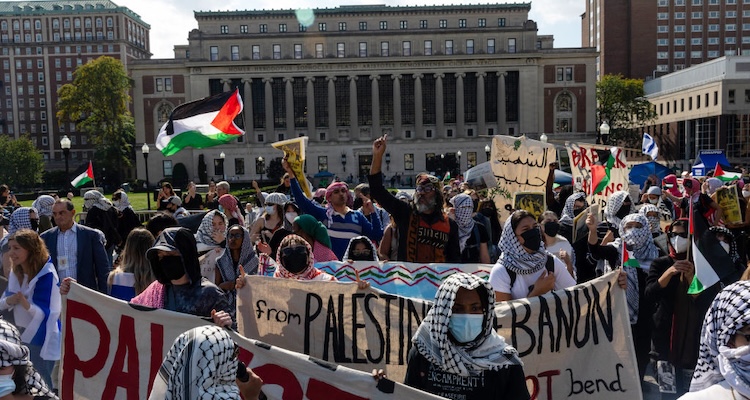
Now, in the somewhat more enlightened 21st century, it is leprosy itself that is dying out. And yet there persist other kinds of deformities, in particular the moral deformity created by Jew-hatred, ignorance, and prejudice, which has spread with astonishing rapidity through the disease vector of social media, transmuting from a rare affliction to an epidemic, and now to a pandemic.
The Hansen’s clinic in Sinegorskiy is still in operation, though mostly to serve the few remaining elderly patients. Up until a few years ago, I was still exchanging letters with some of the friends I’d made among the patients. As a sort of last revelation, it occurred to me that the patients were no different from the non-afflicted residents of Sinegorskiy. Yes, unlike the patients, the others could go to the grocery store or drive to nearby cities. But none ever left Sinegorskiy or its environs for another country, and few ever evinced any desire to do anything but live out their lives in the company of television and vodka. Indeed, there wasn’t a single bully back then even imaginative enough to force me to say Ирина работа лепра, or “Irina rabota lepra,” a snide way of saying that I worked with lepers and a phrase that contained the same dreaded rolling r’s as “Рома работа тракторист.” Why? Because they found my work with lepers a less ripe target for derision than my existence as a Jew.
_____________
There is an old and all-too-apt expression in Russian that translates as “we are to exist, not to live.” The slightly ungrammatical English translation only adds to the poignancy of the helpless and hopeless psychology underlying it. Existing, and not living, was what my parents were doing—my father, a university professor of mathematics, quit the teaching profession on the very day he was set upon by a gang of Chechen anti-Semites. That’s what the patients were doing too, content to live out their lives in the confines and on the grounds of the Sinegorskiy Clinic, their own kind of “living death.” And that’s what I was doing, as well—living until I died—until my aunt (herself a social outcast because she was born intersex) encouraged me to emigrate to the U.S. and lent me the money to do so.
Above all, it’s what the world, at least a good portion of it, asks of the Jews: “Live, if you must, but don’t make waves. Live simply, don’t be bold or claim with pride and passion your Jewishness. Don’t try to change the world. Exist quietly, and only under our sufferance, until you die.”
Here in the U.S., I sometimes still feel like an outcast, and a silenced outcast at that. I am a Jewish student, and a strongly pro-Israel one, in one of the more hostile environments in America, the campus of Berkeley. I often feel constrained from speaking my mind in classes where I am the lone supporter of Israel’s existence as a Jewish state. Still, I am determined to make something of myself, to state forthrightly what I think and to “live, not just exist.” In the words of Deuteronomy, “I have set before you life and death, blessing and cursing; therefore choose life, that both thou and thy seed may live.”
I recently came across a picture online of a bust of an Egyptian priest of Lysimachus’s era. Its nose and forehead have been decayed by time, the face ravaged and crumbling and very nearly destroyed, as if it were Lysimachus, and he had suffered an ironic historical revenge for his slanders about “leprous” Jews, with no one to comfort him or rescue his reputation through eternity. But the irony was too neat; I can find no proof that it is actually Lysimachus himself.
Better, then, to leave the last word to the real hero of the modern battle against leprosy, Dr. Faget, who wrote the following after his early patient trials with sulfone compounds:
“This is the Modern Age, the Age of Light. Let us have the truth. Leprosy is not a dirt disease. Leprosy is not due to any sin committed by those who contract it. It is not a retaliation of God against its victims. Leprosy is a germ disease just as tuberculosis, typhoid fever and pneumonia are germ diseases. It is no more shameful to be infected with the germs of leprosy than with those of tuberculosis, typhoid or pneumonia. So why discriminate against one of these diseases? Ignorance is the answer. Therefore, let us all cooperate and pull together—the patients and personnel. Together we will succeed; divided we will fail…. Let us have courage; we are making strides forward and upward, out of the valley of darkness, over the mountains of difficulties, and into the sunshiny plains of tomorrow.”
I think these words can well be directed today to the new corps of the infected, those ill with the resurgent and deadly pathogen of anti-Semitism—the most contagious, in fact, of all contagious diseases. They are rotting away from the inside with seething hatred and prevarication. But unlike anyone ever afflicted with Hansen’s disease, they have the power, should they have the moral strength, to heal themselves.
We want to hear your thoughts about this article. Click here to send a letter to the editor.