If every era gets the scandals it deserves, it is a notable feature of our own that so many are linked inextricably to conspiracy theories, and that some of those conspiracies turn out to have merit.
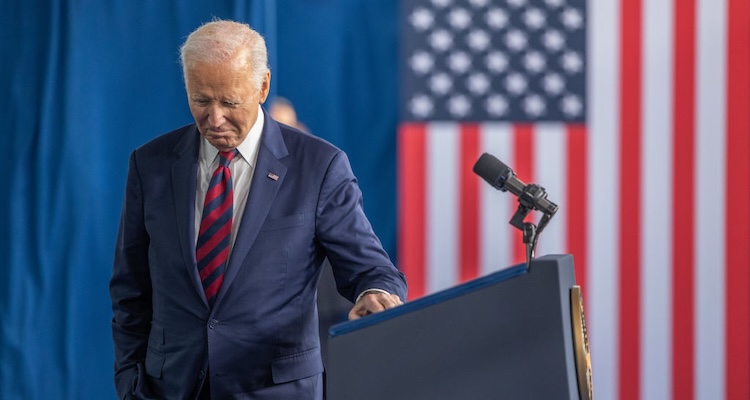
Two recent stories illustrate the connection. Reporter Alex Thompson of Axios obtained internal White House emails revealing that “high-ranking Biden administration officials repeatedly questioned and criticized how the president’s team decided on controversial pardons and allowed the frequent use of an auto-pen to sign measures late in his term.”
The flurry of pardons and grants of clemency (the most a president has ever issued) were not driven entirely by magnanimity, nor were they, as the White House claimed at the time, granted only to nonviolent offenders. The negative reaction to President Biden’s pardoning of his son, Hunter, on December 1, 2024, after repeatedly stating that he would not pardon him, drove the activity. “There was a mad dash to find groups of people that he could then pardon—and then they largely didn’t run it by the Justice Department to vet them,” one official told Axios. As a result, some violent offenders, including a man who murdered a mother and her two-year-old daughter, were granted clemency.
What does this have to do with conspiracy theories? For years, critics of the Biden administration pointed to evidence of the president’s physical and cognitive decline and suggested that he was not the person running the country but rather that he leaned heavily on a close-knit group of aides and family members who rigorously managed his day-to-day activities. Indeed, even as a candidate in 2020, Biden demonstrated notable lapses in memory. “We hold these truths to be self-evident. All men and women created by—you know, you know, the thing,” he said at one campaign stop, bungling the beginning of the Declaration of Independence.
By November 2021, after less than a year in office, a Politico/Morning Consult poll revealed that only 40 percent of voters believed Biden was in good health, and most had already decided he shouldn’t run for reelection. Yet Democratic operatives and Biden administration officials consistently called such concerns right-wing conspiracy theorizing. The dismissive tone of Democratic pollster Celinda Lake was typical. She told Politico, “The people who believe this are Trump supporters anyway or they’ve been exposed to the right-wing disinformation machine.”
And yet this supposed conspiracy ended with Biden’s hasty withdrawal from the 2024 race after a disastrous debate performance in which his cognitive challenges were on clear display, and then the eventual return of Donald Trump to the Oval Office. It has brought us to a moment when even mainstream news outlets must ask whether Biden knew what was happening when his staff authorized the use of the autopen to sign those last-minute, mass pardons. It has led to an ongoing congressional investigation into the Biden administration’s practices and the legality of some of its directives.
The same week the Axios autopen story dropped, the Wall Street Journal published a letter purported to have been sent from Donald Trump to Jeffrey Epstein for Epstein’s birthday—the existence of which Trump had repeatedly denied.
When the Journal first reported on it a few months earlier, Trump sent White House officials out to claim, as one spokesperson put it, “Democrats and Fake News media desperately tried to coordinate a despicable hoax.” Vice President JD Vance went on social media to state, “This story is complete and utter bulls—t.” And Trump dispatched his lawyers to file a defamation suit against the newspaper asking for $20 billion in damages.
Both stories demonstrate how difficult disentangling conspiracy from reality is when it comes to holding powerful people accountable for their behavior. Although Biden and Trump are both the targets of conspiracy theories, they also benefit from them, in the sense that the conspiracies have an obfuscatory effect on the pursuit of truth. Conspiracy also pairs well with partisanship, as the Russiagate hoax in Trump’s first term demonstrated, and each side in our polarized culture has its own pet conspiracy theories that enthusiasts cultivate.
Conspiracy theories are also persistent; even after their central figures have shuffled off the public stage (in the case of Biden) or off this mortal coil (like Epstein), they never really die. They just surface “new information” on discussion boards and in chat rooms.
Of course, Americans have always loved conspiracy theories, and the number of Americans who believe in conspiracy theories has remained largely steady during the past several decades, according to political scientists Joseph E. Uscinski and Joseph M. Parent. What has changed is the role technology has played in spreading such theories. The internet and social media platforms have created a media ecology almost perfectly suited to the creation and dissemination of a multitude of conspiracy theories. They act as amplifier and accelerant to the very human tendency to believe in conspiracies.
Like hyperlinks, which changed the form and function of text and, as a result, the experience of reading, what might be called hyperconspiracy—a form of conspiracy formation and acceleration aided and abetted by technology platforms—has transformed the cultural impact of conspiracy theories. It doesn’t matter if more people believe in conspiracies or not, because through technology’s amplification power, conspiratorial thinking has infected nearly every aspect of culture, offering generous rewards to its most enthusiastic world-builders. In the hands of its most sophisticated and despicable practitioners (Tucker Carlson, Candace Owens, Hasan Piker), it has become its own dark form of entertainment for the masses.
As for accountability, that, too, has been transformed in this time of hyperconspiracy. There are true things about both the Biden autopen scandal and the Trump-Epstein relationship for which both men should be held accountable. But it will be hard for that to happen because of the difficulty in disentangling the conspiracies from the facts.
Biden’s White House staffers and the media were largely successful in conspiring to keep his physical and cognitive decline hidden, even if his legacy is permanently tarnished.
In Trump’s case, brazenly denying something and calling it fake, a tactic that has brought him success repeatedly throughout his career, might also be an effective response in the short term. After the Wall Street Journal printed a copy of the letter he claimed did not exist, Trump and his defenders doubled down, calling it a forgery. When asked for comment, Trump said it was a “dead issue.”
Perhaps. But the thing about conspiracies is that they never really die. They just adapt and reemerge in new and unexpected forms, ones even savvy politicians and cultural power brokers cannot predict.
Photo: Grant Baldwin/Getty Images
We want to hear your thoughts about this article. Click here to send a letter to the editor.