A cease-fire is a binary choice, especially when it is billed by the one offering it—who happens to be the president of the United States—as “my last warning, there will not be another one!”
It’s a yes-or-no question. And Hamas said no. Perhaps now they’ll reconsider.
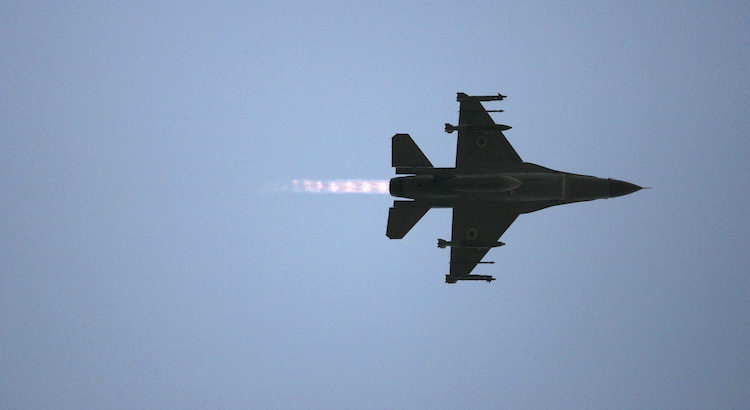
While we await the results of Israel’s strike in Doha, aimed at eliminating top Hamas officials there, a specific point has been made: Hamas leaders in Qatar are not immune. The zillionaire monsters and murderers are part of this war even if they live in luxury in Doha.
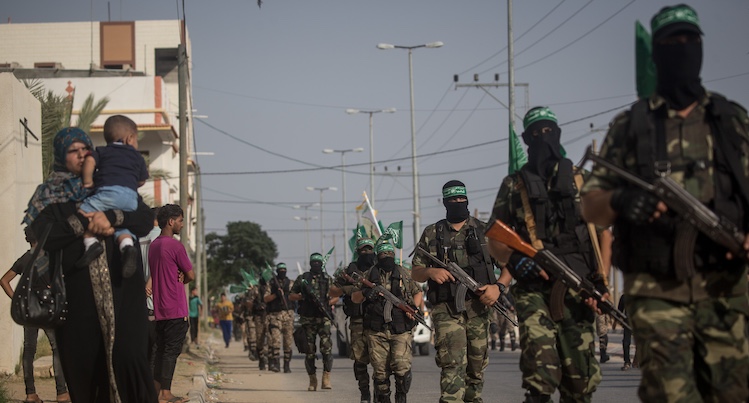
Hamas has left Gazans little more than rubble. To counteract the Hamas strategy of using Gazans as human shields, Israelis are daily putting their lives in danger to avoid harming those very civilians. And all the while the fatcats pull strings from their gleaming digs in one of the wealthiest countries in the world.
Until they accept the cease-fire offer, Hamasniks are in a permanent state of war. So please disregard the kind of spin and reporting that paints them as the opposite. Such as this Associated Press lead: “Israel launched a strike targeting Hamas’ leadership in Qatar on Tuesday as they considered a U.S. proposal for a ceasefire in the Gaza Strip. The strike on the territory of a U.S. ally marked a stunning escalation and risked upending talks aimed at winding down the war and freeing hostages.”
This is the go-to spin for those who think Israel should tie one hand behind its back as it fights a defensive war. When Israel eliminated Hamas leader Ismail Haniyeh in Tehran last year, talking heads also warned that it could endanger cease-fire talks. In this way, according to the media, Hamas leaders are always considered potential peace partners until the day they die.
It’s a brilliant gimmick: Hamas can turn its back on an offer of peace and 24 hours later be heralded as the key to a peace agreement because maybe they’ll change their minds.
There is, of course, the minor matter of Hamas’s pledge to maintain permanent war against Israel. But, like the group’s rejection of the cease-fire, what Hamas actually says is never factored into coverage unless it’s blaming Israel for Hamas’s own crimes. If Hamas says no to a peace deal, it is reported as “considering the terms of a cease-fire proposal.” If Hamas says Israel killed 14 million people today, that will be the headline, without attribution, on tomorrow’s front page.
It’s unknowable (at least at the moment) what Hamas leaders were discussing when Israel ordered the strike. Perhaps it was the cease-fire they already rejected, as the AP suggests. Or perhaps they were debating Josh Allen’s chances of repeating as NFL MVP. Maybe they were arguing over whether Tom Cruise and Ana de Armas will live happily ever after. It doesn’t actually matter. Terrorists in expensive suits are still just terrorists.
Is Israel’s strike an “escalation” because Qatar is a U.S. ally? The U.S. doesn’t think so—the strike appears to have been cleared beforehand. Is Qatar’s hosting of those making war against Americans a sign of allyship? I suppose that’s open to interpretation. But again, irrelevant.
Is it an escalation anyway? To the extent it was an escalation when Inigo Montoya switched his sword from his left to his right hand against the Man in Black.
Keir Starmer disagrees. The UK prime minister condemned the strike as an escalation, and then in the very next breath said this: “The priority must be an immediate ceasefire, the release of hostages, and a huge surge in aid into Gaza.”
Well, yes—that’s what Israel and the U.S. want, too. Hamas doesn’t agree, which is why it continues to reject the cease-fire. And if world powers are going to defend Hamas every time it rejects a cease-fire, there won’t be a cease-fire. So it’s Starmer vs. Starmer. He rejects both war and peace.
Really what he rejects is Israel’s right to defend itself. And that’s the one thing that isn’t up for debate.