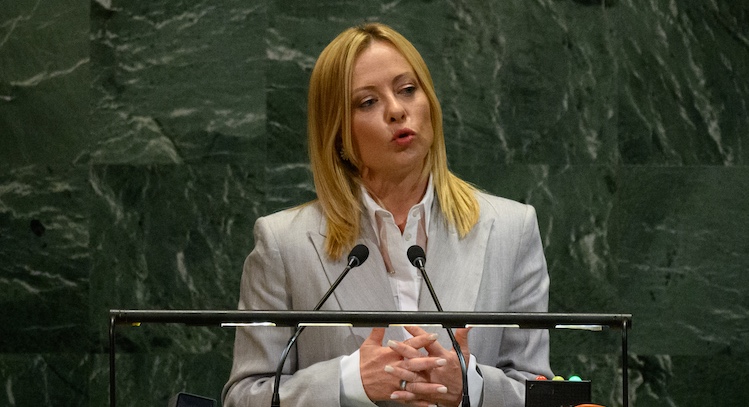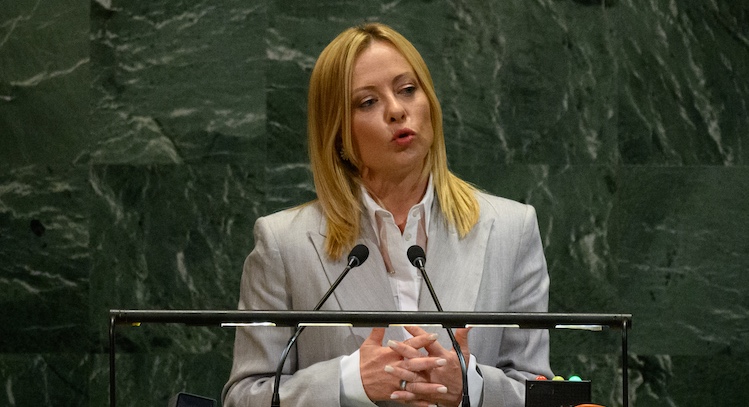
It has become a revolutionary act to mean what you say about the hostages in Gaza. So it was refreshing to see and hear the comments made by Italian Prime Minister Giorgia Meloni and Singaporean Foreign Minister Vivian Balakrishnan this week.
Both have criticized Israel’s conduct in Gaza but oppose rewarding Hamas for its slaughter. Most important, they pointedly refused to recognize a Palestinian state while that Palestinian state is still holding hostages.
Meloni said she’d be happy to see her government recognize Palestine once “two conditions” have been met: “the release of the hostages, and, of course, the exclusion of Hamas from any role in governance within Palestine.”
Vivian Balakrishnan, meanwhile, declared that it wasn’t enough for the countries recognizing Palestine this week to merely “expect, perhaps wishfully, for Hamas to disarm and to release all the hostages.” As for rebuilding Gaza, he said, Singapore will be there to help in any way it can. “But there needs first to be a permanent ceasefire, and all the hostages must be released unconditionally. Only then can physical reconstruction and healing begin.”
At the outset of the war, this was the sort of sentiment that could be taken for granted. Over time, the hostages faded from the world’s attention. Now, France and Britain and others are unembarrassed to stand in front of the world and reward Hamas for its refusal to release the remaining hostages.
France may have moved on, but the Jews of the world should not.
The hostages represent a red line for the Jewish community, a litmus test not only for Palestinian statehood but for any honest participation in the discourse around the war between Israel and Hamas. And there is a very simple reason for that: Support for the hostages is the only neutral position in this war.
It is, of course, legitimate and appropriate to choose sides. But the only truly universal position is this: The hostages must be released.
Watching actors and musicians demonstrate for Gaza could make anybody cynical. None seem capable of speaking a sentence without using the word “empathy.” Empathy should be easy, the celebrities lecture us at “free Palestine” gatherings or at concerts or on the red carpet, and the politicians lecture us from atop the high horses on which they ride into work each day.
But in fact such people rarely possess the empathy they preach. How do I know? Because they don’t mention the hostages in the same breath. The actors wearing bloody red hand pins—a depraved show of support for violence against Israel—might indeed feel for Gazan civilians. But if they believe, as they often say, that all people have the right to live in peace and that children should be protected in any conflict, they’ll be wearing a yellow hostage pin.
Most distressing of all, though, are the musicians. After all, this conflict began with the largest massacre at a music festival ever. Many of the hostages were taken from those grounds as well. How could any musician not be haunted by it? So sure, raise funds for your favorite Gaza charity up on stage, but how many of these artists offered to play a benefit concert for Nova? How many raised funds for the rebuilding of the kibbutzim in the Gaza envelope?
On October 8, 2023, as U2 performed in Las Vegas, Bono dedicated a song to “those beautiful kids at that music festival.” So Bono’s criticism of Israel’s prosecution of this war has some claim to sincerity. Thom Yorke of Radiohead has no trouble criticizing the Israeli government while in the same breath making clear that “the unquestioning Free Palestine refrain that surrounds us all does not answer the simple question of why the hostages have still not all been returned? For what possible reason?”
Morally, advocating the release of the hostages is the only truly easy call in this whole war no matter what side of the aisle you come from or what your political prior biases were. So, yes, absolutely make it a litmus test. It should be a low enough bar for anyone to clear.