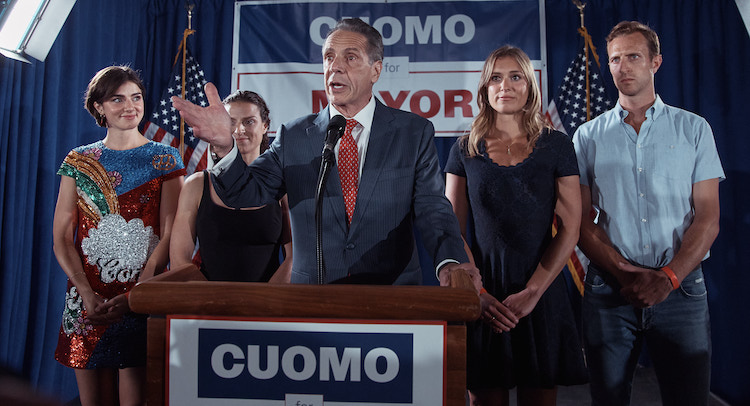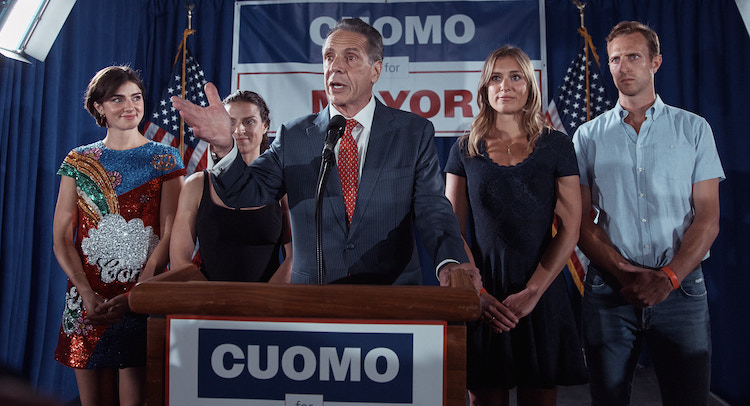
Andrew Cuomo has decided to haunt New York City like a ghost.
The former governor lost the city’s Democratic mayoral primary to anti-Zionist activist Zohran Mamdani, and yesterday he announced his plans to lose the general election to Mamdani as well.
“As my grandfather used to say, when you get knocked down, learn the lesson and pick yourself back up and get in the game. And that is what I’m going to do,” Cuomo tells voters in a video announcing his continued candidacy for mayor. Cuomo will simply run as an independent, further distending an already bloated category of “Democrats that Democrats don’t like anymore and are therefore running as independents.”
It’s not clear which lesson Cuomo learned from his primary defeat. It is easier to identify the lessons he did not learn. And one of those lessons was that left-leaning voters are ill-disposed toward establishment figures who can’t let go and walk away. In this, Cuomo’s decision to stay in the race plays into his opponent’s hand.
Cuomo has proposed that if he is ahead in the polls in September, Mayor Eric Adams (also running as an independent) should drop out, but that if Adams is the strongest-polling non-Mamdani, Cuomo will finally stop picking himself back up again and getting back in the game, as his grandfather apparently would have said.
To be fair, Cuomo is polling as the strongest non-Mamdani right now. He also knows what to do with a campaign war chest and doesn’t pull punches.
But it’s impossible to look at Cuomo’s candidacy without thinking about the circus of New York City’s 2013 elections.
That was supposed to be the big comeback year for two of New York’s former officeholders: Eliot Spitzer and Anthony Weiner.
Spitzer was elected governor in 2006 after two terms as attorney general, during which he made his reputation as “the sheriff of Wall Street.” Spitzer brought civil claims against big banks for misleading investors, catapulting him to the national stage. As governor, however, he imploded after getting caught in a prostitution scandal, leaving office in 2008.
In 2013, Spitzer decided it was time for New Yorkers to forgive him. New Yorkers disagreed. Spitzer ran for city comptroller and lost the Democratic primary to Scott Stringer.
Anthony Weiner, meanwhile, was a fiery congressman from Brooklyn for over a decade before flaming out in his own sex scandal—it turned out he was a serial sexter to women who were not his wife, the Hillary Clinton aide Huma Abedin. (The two are now divorced.)
Weiner resigned in 2011 and joined the 2013 Forgiveness Elections alongside Spitzer. Weiner ran for mayor, and had a surprisingly realistic path to victory. Until, that is, new revelations of his past sexting habit cropped up. He lost. Later investigations into his shenanigans famously became entangled in the investigation into Clinton’s email use as secretary of state, arguably costing her the presidency.
Cuomo’s controversies are less salacious, but he did resign from the governorship amid accusations of sexual harassment, which came after he had somehow survived his mishandling of nursing homes during the Covid pandemic.
So although comebacks are fairly common in American politics, New Yorkers tend to be less enthusiastic about giving second chances. And this year would appear to be among the worst times to attempt such a comeback: Zohran Mamdani’s primary victory has been universally interpreted as a rebuke to an aging, unchanging Democratic Party establishment. It’s no surprise that with Joe Biden’s debacle still fresh, progressive voters went in the opposite direction with the 33-year-old Mamdani.
When they did so, however, they elevated to national stardom the poster child for the angry hordes shouting “Globalize the Intifada” and whose entire public persona is built around a hostile obsession with Jews and Israel. Cuomo’s apparent sense of entitlement already helped nudge voters into Mamdani’s arms once; that dynamic might only become more entrenched in voters’ minds with Cuomo’s announcement that he’s still in the race.
Cuomo understands that the rest of the field should coalesce around one non-Mamdani candidate. That is basic math. But Cuomo’s belief that he should be that candidate makes him look like a man who can’t let go until voters drag him out of the arena kicking and screaming. And in New York, voters tend to enjoy doing so.