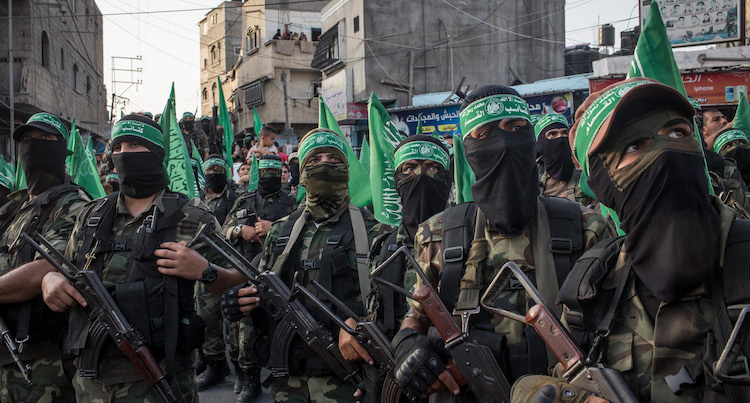
We spend a lot of time hearing lectures about what Hamas is not. Hamas is not, we are told, something that can be killed. It is an idea, you see, and you cannot kill an idea.
Nor can Hamas be defeated, we are told. It might be time for Israel to just accept that “some kind of terrorist threat will be harbored [in Gaza] for years to come,” Ross Douthat writes.
What else is Hamas not? Well, it follows from the above that Hamas is not an existential threat; sometimes this is said explicitly and sometimes implicitly.
People love to talk about what Hamas is not. But once one is finally able to turn the conversation to what Hamas is, all we get are descriptions—Hamas is evil, Hamas is a terrorist organization, Hamas is a death cult.
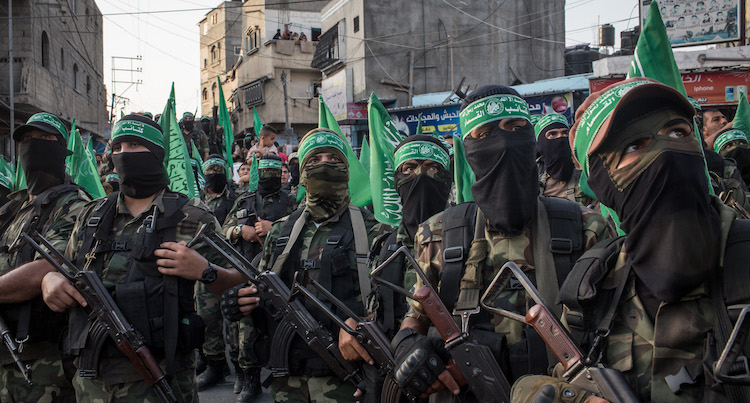
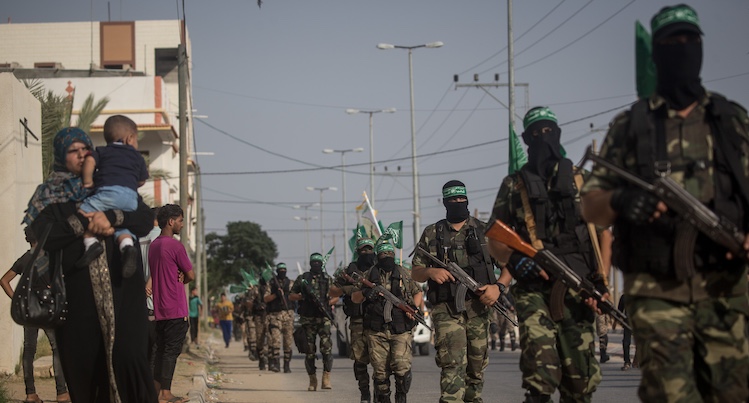
But here’s something else that Hamas is: Hamas is the government of Gaza. Pretty much every single diplomatic statement, newspaper article, and NGO report excludes this fact. The reason for that is simple: Palestinian advocates worry that acknowledging Hamas’s representative position is tantamount to saying “there are no civilians in Gaza.”
But this is absurd. Nobody believes there are no civilians in Russia, for example, just because Vladimir Putin heads the government in Moscow. We don’t, in fact, talk about any other polity this way.
Being clear on this fact isn’t about what Israel can or cannot do to Palestinians in Gaza; it’s about what Hamas owes the people who live there. Because what else is Hamas? For one, Hamas is well-fed and well-supplied.
As Amit Segal writes today, “Hamas operatives openly guard convoys to their warehouses, systematically skimming off 15-20 percent of the aid (according to verified sources). Just last month, aid delivered by the UN to northern Gaza was openly redistributed by Hamas members in full view of cameras.”
What’s more, “Every resident of Gaza knows exactly where Hamas stores the flour it steals from the UN. Last spring, mobs repeatedly stormed Hamas’ warehouses in central and northern Gaza, emptying them of tons of flour. How did Hamas accumulate hundreds of tons of flour, eighteen months into a war, when Gaza itself produces no wheat?”
How indeed? Gazans are also forced to buy back from Hamas what Hamas has confiscated from them personally.
Yet here is a recent statement from the European Union, and it is highly representative of such communiques:
“The EU calls for an immediate ceasefire in Gaza and the unconditional release of all hostages, leading to a permanent end to hostilities. The EU continues to fully support the mediators — US, Egypt and Qatar. It deplores the dire humanitarian situation in Gaza, the unacceptable number of civilian casualties and the levels of starvation. The EU calls on Israel to fully lift its blockade on Gaza, to allow immediate, unimpeded access and sustained distribution of humanitarian assistance at scale into and throughout Gaza and to enable the UN and its agencies, and humanitarian organisations, to work independently and impartially to save lives and reduce suffering. Israel must fully comply with its obligations under international law, including international humanitarian law.”
The only obligations on Hamas in these statements are to return the hostages. All food-related obligations are on Israel. But if the government of Gaza has food, shouldn’t it be pressured to share that food with the civilians who are, we are told, starving?
Indeed, it should be a pressing concern, because Hamas was the one that blew up cease-fire talks. So pressuring Hamas to abide by a ceasefire that it won’t agree to is, in effect, pressuring Hamas only to take the actions we know it won’t. But even if there’s no cease-fire, Hamas can distribute the food it has, right? And shouldn’t the United Nations—I’m trying to write this with a straight face—insist that Hamas share the UN’s own food aid with hungry civilians?
Is there another government that starves its own people without a single objection from the “humanitarian” world?
Honestly, such pressure is the absolute least these NGOs and European governments can do. After all, Hamas blew up the cease-fire negotiations and yet these governments and organizations managed to ensure that Hamas would still get exactly the same benefits anyway, just without having to release hostages.
The constant chatter about a two-state solution by these voices lives under the dark shadow of their hypocrisy toward Hamas. That is because they don’t consider the Palestinian government to be obligated to do anything for anyone. Perhaps that ought to end right now, if indeed the crisis in Gaza is as acute as this large band of hypocrites insists.