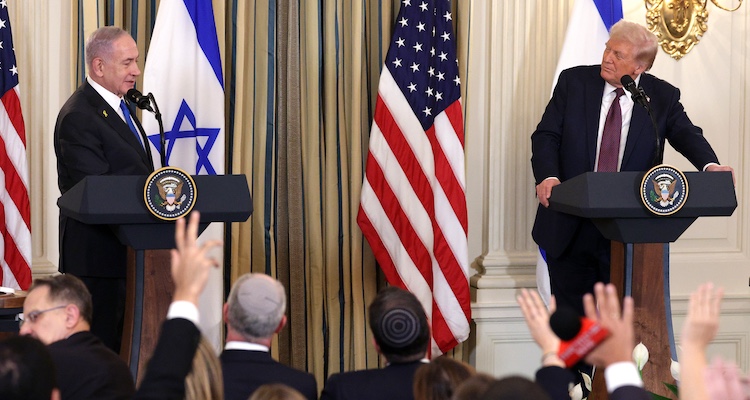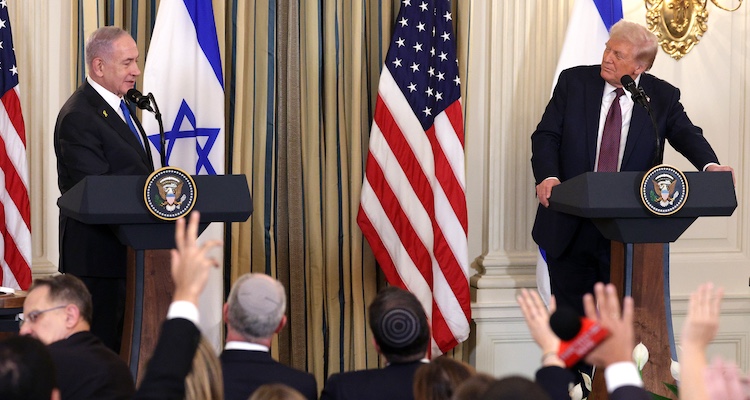
The most important words in this afternoon’s press conference with President Trump and Israeli Prime Minister Benjamin Netanyahu were when Bibi said: “Here’s our plan. Pass it in the Cabinet.”
Netanyahu was referring to his own Cabinet, not Trump’s. The Israeli premier was answering a question that has dogged him nearly the entire war in Gaza, Israel’s longest. What is his plan for the Day After? Today, Trump and Bibi unveiled the president’s 21-point plan for ending the war in Gaza and transitioning the enclave through temporary stewardship, reform, and rebuilding to what everyone hopes will be normal governance on the other side of that process.
Netanyahu fully embraced what he called “our” plan. In contrast to much of the war, the ball is now in many different courts but not Bibi’s.
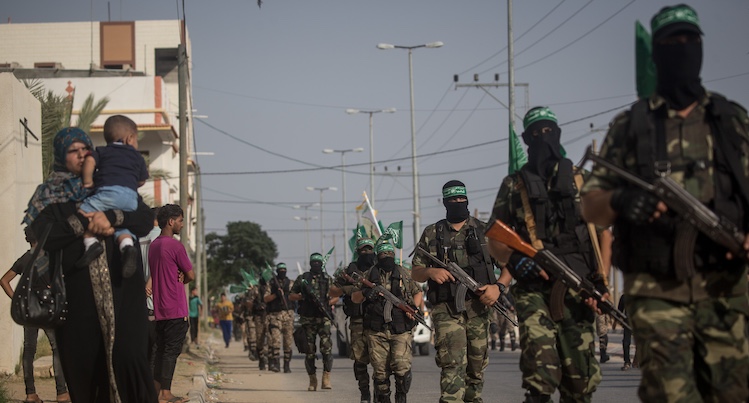
First and foremost of those courts is Hamas’s. The terror group running Gaza is represented in negotiations by Qatar, in whose court the ball now resides as well. Everyone else, we’re told, is on board. The Qataris put up one roadblock to make sure Netanyahu was serious about ending the war, and that was to demand a private apology from Bibi over the Israeli strike in Qatar, and an acknowledgement (in public, and therefore more important to Qatar) by Bibi of Qatar’s sovereignty. The deal itself stipulates that Israel won’t try that again.
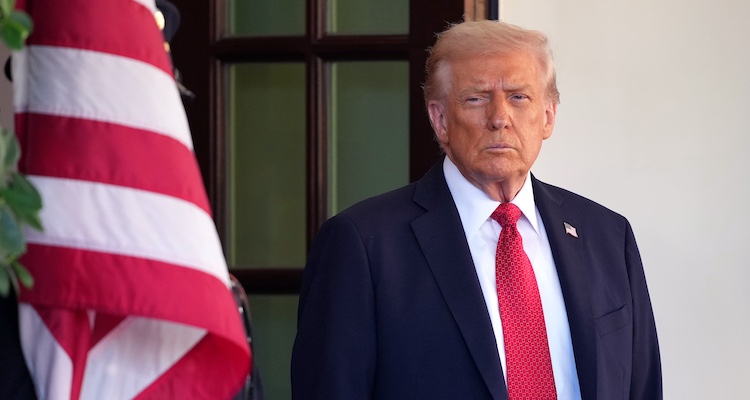
Qatar has no excuses now, and a bit more skin in the game. It can either deliver for Trump or embarrass the president. If it does the latter, the president’s seemingly boundless patience with Qatar will disintegrate.
If Qatar fails here, it will be because Hamas said no. And if Hamas says no, it will be because Hamas has no intention of ever saying yes. And no one—not Trump, not the Qataris, not Greta Thunberg—will save Hamas from what happens then.
The ball, as noted above, is also in the Israeli security and political establishment’s court. That establishment is unlikely to raise any substantial objection to anything in this deal. Indeed, if anything, opposition parties will offer Bibi “insurance” to get this deal through by volunteering to replace anybody who leaves the governing coalition.
But now that Netanyahu has agreed to end the war, the narrative undergirding Israeli politics shifts. Bibi has a plausible claim to say, at least going forward, that the country doesn’t have to choose between this government and the hostages. While that won’t win him absolution for anything that came before this moment, Bibi wanted and needed some kind of change, and he got it. What he can do with it politically, no one yet knows.
The ball is, to some extent, in Europe’s court as well. Outside of Israel and the U.S., no one on the planet will be happier than Germany if this deal actually goes through. Chancellor Friedrich Merz has been walking a tightrope, and he has been doing so skillfully—but he’ll be glad to walk on the ground again. Merz will be the deal’s main advocate in Europe, which will benefit the U.S. and Israel because he is one of the very few serious politicians left on the continent.
If the deal gets signed and implemented, it will be a huge victory for politics and diplomacy, and a significant defeat for the anti-diplomatists of Britain, France, Spain, Canada, Australia, and others like them. You don’t have to like Donald Trump, but you have to work with him—he’s the U.S. president. If you want to end the war in Gaza, you also have to work with Bibi Netanyahu.
It’s easy to say this deal would do far more to help the Palestinians than the play-pretend game of recognizing “the state of Palestine” that so many world leaders played last week, because the recognition stunt does nothing at all for the Palestinians. But it’s worth noting that the U.S. and Israeli approach is incontestably serious, whatever ultimately happens with it. The EU and UN approach was to call Israel names. Only one of those approaches treats the Palestinians as if they are something more than a reality TV show, and it is not the EU and UN approach.
None of this can be taken for granted. But Netanyahu’s full-throated buy-in today, right down to the very words he used, will make it easier even for skeptics to picture the light at the end of this tunnel.