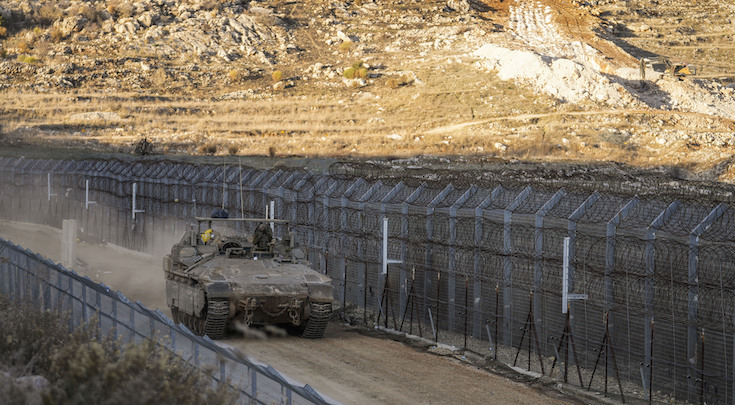
Where in the world is Bibi Netanyahu? Like the old Carmen Sandiego computer game, we’re following clues, tracking steps, investigating sightings. Turns out he’s on Mount Hermon in Syria today, at a briefing with top IDF brass.
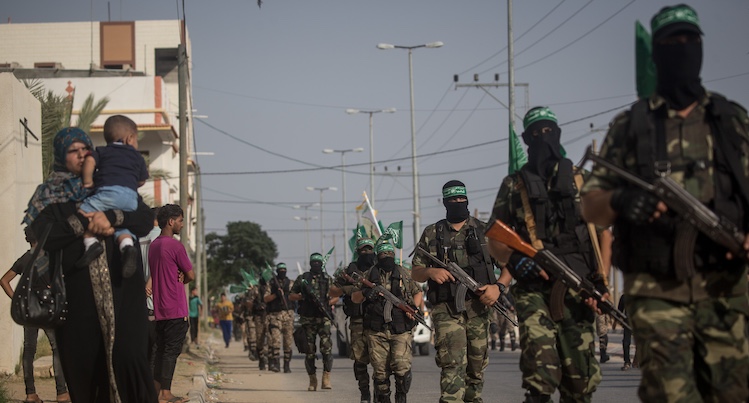
He was rumored to be en route to Cairo for Hamas cease-fire talks, and while he wasn’t there this morning, he may be by tomorrow. Negotiations over a hostage deal appear, by all accounts, to be in the home stretch.
The visit to Mount Hermon is significant: it might be the first time a sitting Israeli premier has been in Syria (openly, at least) while in office. What his Syria trip and his expected Cairo trip have in common is that they are to assess the status of de-Iranization in the region.
The last time a power vacuum of this magnitude opened up in the Middle East was the fall of the Soviet Union. Before that, it was the end of the British Mandate for Palestine. Iran is not gone completely, of course—far from it. Yet its empire is collapsing in much the way the Ottoman Empire collapsed a century earlier: In a global conflict, it is aligned against the West and it is paying for that choice.
Netanyahu, Egyptian President Abdel Fattah el-Sisi, and Jordanian king Abdullah cannot wait for the dust to settle, because nature abhors a vacuum.
As does Turkey.
“Senior U.S. officials say Turkey and its militia allies are building up forces along the border with Syria, raising alarm that Ankara is preparing for a large-scale incursion into territory held by American-backed Syrian Kurds,” reports the Wall Street Journal today. “The forces include militia fighters, Turkish uniformed commandos and artillery in large numbers that are concentrated near Kobani, a Kurdish-majority city in Syria on the northern border with Turkey, the officials said. A Turkish cross-border operation could be imminent, one of the U.S. officials said.”
Turkey has backed a collection of rebel forces and has been newly empowered by those groups’ territorial gains in the wake of Assad’s fall. Hayat Tahrir al-Sham, the former al-Qaeda offshoot that has led the overthrow of Assad and now controls Damascus, is in alliance with Turkey, allowing Turkish forces to “operate within territories it controlled and the establishment of Turkish observation posts in northern Syria” before the fall of Assad, notes FDD analyst Ahmad Sharawi in a policy brief today. “HTS has even positioned itself as a gatekeeper for Ankara, curbing drug trafficking into Turkey, preventing ISIS infiltration, and apprehending individuals wanted by Turkish authorities. HTS leader Ahmad al-Shara, long known by his nom-de-guerre Abu Mohammad al-Jolani, had also allegedly supported Turkish military operations east of the Euphrates, according to a report by the Turkey-based Syria TV broadcaster.”
Meanwhile, Qatar, who along with Turkey has been a key patron and diplomatic ally of Hamas, just announced it will be reopening its embassy in Syria, which has been closed for 13 years. Russia is in talks with the new regime in Damascus to keep its naval access along Syria.
The U.S. has immediate interests on the ground as well. American troops worked with Kurdish forces against ISIS, and those Kurdish forces remain tasked with keeping ISIS remnants from regrouping. The Turks, however, want to see the Kurds beaten down lest they get any idea of self-determination themselves—the Kurds hold territory in Iraq and Syria bordering Turkey. So Turkish-backed forces have prevented US-backed Kurdish forces from continuing their battle against ISIS.
For his part, HTS leader Abu Mohammad al-Jolani is keeping his options open. In recent days, he has pushed back against anti-Zionist groups agitating for hostilities between the new Syria and Israel, counseling patience. And in his first interview with The (UK) Times, Jolani said that an Israeli withdrawal from the buffer zone will be a negotiated exit that will come with Syrian guarantees of its own: “We do not want any conflict whether with Israel or anyone else and we will not let Syria be used as a launchpad for attacks. The Syrian people need a break, and the strikes must end and Israel has to pull back to its previous positions.”
There is rarely a dull moment in the Middle East, but this moment is unusually frenetic. And no one in the region or among world powers can afford to sit it out.