One of the contractors for California’s high-speed rail project announced a bit of good news this week. The startup Exodigo raised nearly $100 million in a follow-up fundraising round. What’s different about this particular startup is that, although technically a transportation and infrastructure company, it could end up changing the future of war.
Jeremy Suard and Ido Gonen, who run Exodigo, served in the Israel Defense Forces’ famed tech and intel units 81 and 8200. Exodigo has contracts with state transportation agencies around the U.S., including New York’s MTA, because its primary innovation is its ability to map underground areas so construction projects don’t interfere with water and sewer lines or run into problems with unexpectedly weak (or, at the opposite end, impermeable) ground formations.
As one might expect, then, it’s good at spotting tunnels.
The company is based in Palo Alto, California, but dozens of its employees served in the current war in Gaza and Suard and Gonen reportedly focused their past military service on tunnel detection and the like. That isn’t surprising; Israel’s elite units are known for translating their tech-related training into real-world civilian industries. The construction angle of this one, however, and its use in major government projects around the world, suggests a two-way pipeline here: military research and technology benefiting the civilian world which then redounds to the benefit of the military by providing prominent and high-stakes testing grounds.
To be clear, Exodigo isn’t after military contracts—the civilian market’s need for mapping is wider and more lucrative. But the knowledge and capabilities discovered during this process may change the world’s understanding of subsurface construction and detection. Hamas’s success at building a tunnel system under Gaza is likely to spur copycats—tunnel warfare is as old as warfare itself—and the adaptive response by Israelis could end up saving untold lives in future wars while also modernizing public construction.
Take the California high-speed rail project. It is now 17 years old despite initial projections that would’ve had it finished five years ago. Its predicted cost has increased from $33 billion to nearly $130 billion. The project includes a 30-mile tunnel—about the same as the Chunnel in the UK connecting England with France. Even setting actual tunnels aside, the ability to map without digging will benefit nearly every facet of overland travel infrastructure as well.
Accurate underground modeling could also one day replace certain environmental tests and other impact studies that drive up costs and delay construction. As the technology progresses, one begins to see any number of additional uses: surely farming, forestry, drainage, and the maintenance of electric and communications grids would benefit from such mapping.
And what helps build tunnels will also, naturally, help locate them.
At its longest point, Gaza stretches a mere 25 miles. But underneath the surface lie some 400 miles of tunnels, an incomprehensible number that would have been dismissed as science fiction before the current war. That number also helps explain why the IDF has struggled to put Hamas away for good and why it hasn’t always been able to try to rescue some hostages even when military leaders knew where they were being held.
Tunnels in Gaza represent an entire underground city; some are reportedly nearly a thousand feet long and wide enough for military vehicles to traverse. But in the past few years Israel has also discovered emerging tunnel systems in Lebanon and less-developed ones in the West Bank.
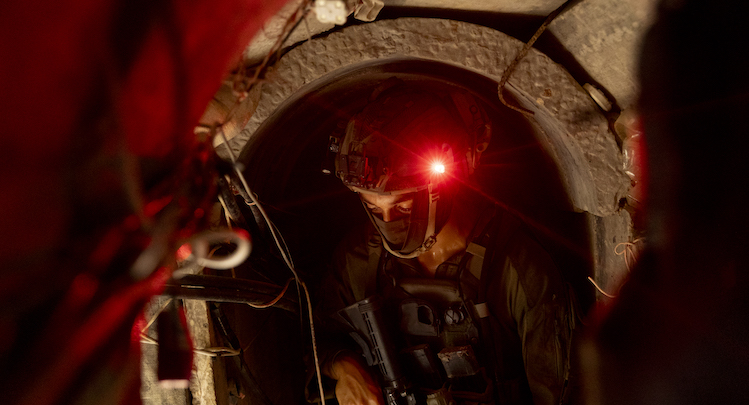
In fact, the Israeli military is still finding tunnels under Gaza, 21 months into the war. Once found, the tunnels can’t exactly just be filled with some of the sand lying around. Nor is it truly possible to learn the extent of the tunnels without sending men into them, where they must navigate booby-traps and explosives and the possibility of gunmen waiting to ambush them or cave in the ceiling from above.
It is a slow, terrifyingly dangerous process. The better mapping technology gets, the less dangerous those tunnels become. And the less dangerous they become, the less useful they are to Hamas and other terrorists.
And all of this is being done to, and by, Israelis. The latest innovations in tunnel warfare are why tens of thousands are dead from this war—in fact, why the war started to begin with. Any time the world thinks up some new evil, it gets tested first on the Jewish state.
And that means the fight to neutralize those threats begins in Israel as well. Israelis aren’t just learning how to survive this war, they are figuring out how to prevent Hamas’s Gazan hell from befalling others around the world. In the process, they are creating technological advances that will benefit the average American or European commuter. Go on, boycott that.