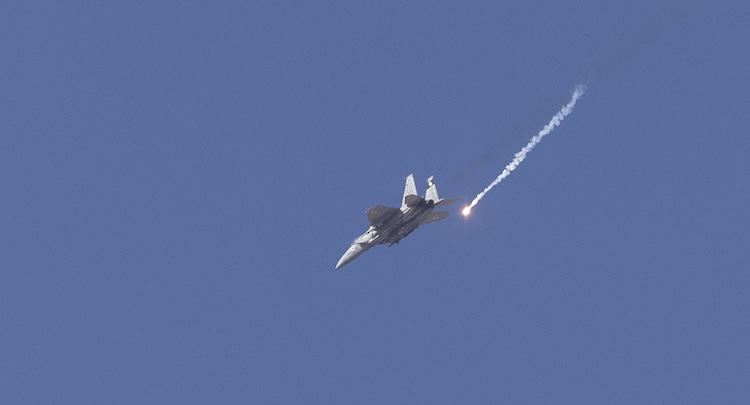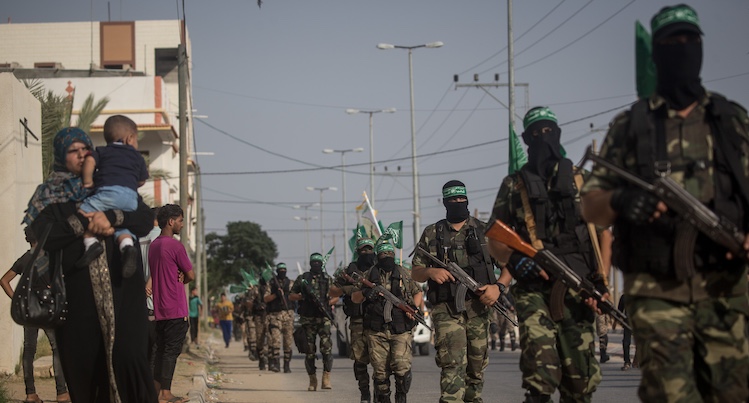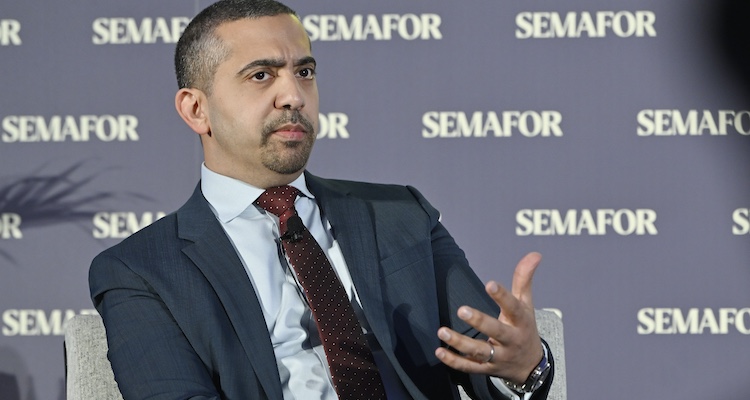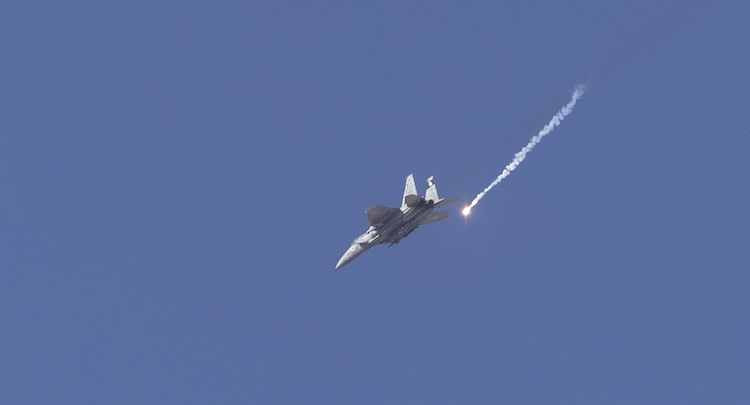
Khalil Al-Hayya made his first public appearance on Saturday night. The chief Hamas negotiator, who is also described by the terrorist organization as the leader of Hamas in Gaza, looked less than excited to be featured on Qatari television. He lost his son, Humam, when the Israeli Air Force, in partnership with the Shin Bet, struck an apartment building in the heart of Doha on September 9.
Three Hamas bodyguards were killed in the attack, along with al-Khayya’s son and a Qatari guard. According to one Israeli source, “the top Hamas leadership was there when the missiles were fired, but they weren’t when the missiles arrived.” For that reason, the attack was widely jeered as a failure. But now, with a Trump end-of-conflict agreement in the offing, the conventional wisdom about the operation is starting to collapse. The Doha strike may prove to have been the motive force leading to the war’s end.
On September 9, Israel formally declared Qatar a part of the October 7 war and altered the trajectory of the conflict. It wasn’t quite a declaration of war. But a message was delivered. After allowing the Persian Gulf microstate to masquerade as a neutral broker, Jerusalem was fast running out of patience.
Of course, the Qataris were an accomplice to the war from the start. As Palestinian terrorists kidnapped and murdered their way through southern Israel on October 7, Hamas leaders tuned in to watch the bloodshed from their headquarters in Doha—a safe haven that Qatar has provided the terror group since roughly 2012. Qatar-owned Al Jazeera gleefully aired footage of the carnage. And yet, in a bizarre turn of events, the Qataris emerged as the key interlocutors between the United States, Israel, and Hamas. This has been the status quo for two years.
That status quo was shattered by Israeli Prime Minister Benjamin Netanyahu authorizing the strike. And he has been skewered for it. But nearly a month later, mainstream media are beginning to realize that the decision helped open the door for Trump’s 20-point plan for Gaza.
As one Arab diplomat stated candidly soon after the strike, “the war is encroaching on the Gulf countries. The conflict is now too close to home.” In a bid to shut down the war before it got any closer, there is now wide regional support (Saudi Arabia, Jordan, UAE, Indonesia, Pakistan, Turkey, Egypt, and Qatar) for the American plan that effectively endorses all of Israel’s war aims: the return of all hostages, the dismantling of Hamas in Gaza, and a post-war future that removes Hamas from the political picture.
Qatar’s endorsement of the deal didn’t come without a cost for Netanyahu. In exchange for its backing, Qatar demanded that Israel apologize. Netanyahu acquiesced. His perfunctory and half-hearted apology means little. But it was a small victory for Doha.
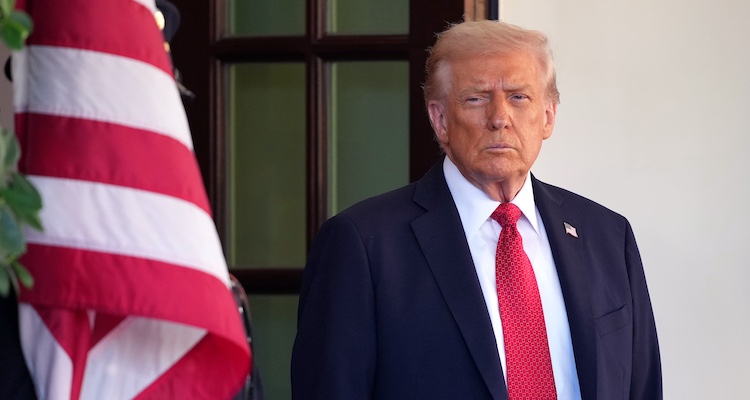
The big win for Qatar was Donald Trump’s security guarantee. An order issued by Trump last week stated, “The United States shall regard any armed attack on the territory, sovereignty, or critical infrastructure of the State of Qatar as a threat to the peace and security of the United States.”
But that, too, did not come without a cost. Qatar, along with Turkey (another American ally that has somehow gotten away with sponsoring Hamas), agreed to help end the Gaza war by pressuring Hamas. This explains Al-Hayya’s Saturday appearance on Qatari television. There is now a full-court press to bring the October 7 wars to a neat and clean conclusion.
Hamas appears poised to drag out its response to Trump’s proposal. Some of this stems from its unwillingness to admit defeat. But, according to one Israeli source, may also be a byproduct of the group’s inability to locate all of the hostages, especially the bodies of the dead.
It is also unclear whether Qatar or Turkey have any real sway over Izz al-Din al-Haddad. The enigmatic new Hamas commander, who quite literally assumed his post through a process of elimination, may not have much communication with Doha, if he has any at all.
If Hamas fails to yield, Qatar’s new security relationship with the United States could be in peril. This is Trump’s ace in the hole. But turning the screws on Hamas will be complicated for Qatar. The emirate’s relationship with Hamas dates all the way to the 1990s, when former Qatari Emir Sheikh Hamad Al-Thani offered some members of the terrorist group sanctuary after it was expelled from Jordan. The relationship took on different dimensions in 2007, after Hamas seized control of Gaza in a violent civil war. Qatar pledged $400 million in support to the strip. Doha then proceeded to pump approximately $1.8 billion into Gaza over the next decade, while funneling millions of dollars “discreetly” to Hamas’s leadership. Eventually, the group opened an office in Doha, where many of the terror chiefs lived in the lap of luxury. None of this was lost on the Israelis.
Remarkably, the Israelis didn’t punish Qatar. Instead, the Mossad saw an opportunity to engage. The Mossad reportedly opened up a station in Qatar in 2017 or 2018. The Israelis also struck a controversial deal, whereby they allowed Qatar to bring an estimated $30 million per month into the Gaza Strip. The move was meant to placate Hamas and keep it quiet. As it turns out, Qatar was simply plying Hamas with the cash that it needed to launch the October 7 attacks.
After October 7, there was little doubt that the Hamas leaders in Qatar would be targeted. It was just a question of when. It happened only after the Israelis came to the conclusion that Doha was either unwilling or unable to secure the release of additional hostages. On September 9, 2025, the Israelis finally moved. The following day, Israeli Ambassador to the United Nations Danny Danon warned that “history will not be kind to accomplices” and warned that “either Qatar condemns Hamas, expels Hamas, and brings Hamas to justice. Or Israel will.”
The Qataris bristled at his remarks. And they launched a public campaign to shame Israel for its attack. But there can be no doubt at this point that the Israelis gave Doha a real scare.
For years, the country has managed to remain an American ally while courting Hamas and other terrorist groups that have American blood on their hands including the Taliban, the Islamic State, and others. This dynamic is dysfunctional, to put it mildly. And it has endured for far too long.
The recent U.S. security commitment to Qatar certainly seems like we’re rewarding bad behavior. On the other hand, Trump also announced a trilateral mechanism for Qatar, Israel, and the United States to iron out areas of disagreement. This should give Israel an opportunity to push Qatar to end its patronage of Hamas.
The question is whether Qatar has enough influence with its terrorist clients in Gaza to end the war as promised. If it is unable, Trump should come down on the Qataris like a ton of bricks. The menu of options could include sidelining Qatari mediators, stripping Qatar of its Major Non-NATO Ally status, nullifying the recent executive order, and holding open hearings about whether the emirate qualifies as a state sponsor of terror. It may not come to that. The end of the war may be in sight. And it probably wouldn’t have been possible without Israel’s audacious airstrike on America’s double-dealing Gulf ally.