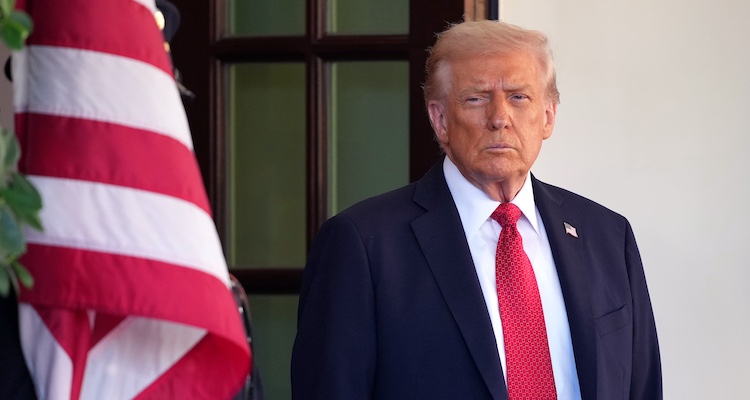
As the big week of Palestine recognition passes, attention turns to how Israel will respond. Prime Minister Benjamin Netanyahu indicated over the weekend that he would consult with President Trump and return to Israel with some idea of what had to be done.
But what if this terrible horrible no-good very bad week was actually… not so bad?
Here’s what I mean: In Britain, Canada, and Australia, the conservative opposition blasted the incumbent governments’ decision to kowtow to the anti-Israel voters in their political coalitions. In Britain, one poll showed nearly 90 percent of the country was opposed to Prime Minister Keir Starmer’s capitulation to Hamas, giving Kemi Badenach’s Tory opposition plenty of reason to believe that Starmer had blundered. Perhaps Bibi’s response ought simply to be to let him fall, Michael Scott-style, right into the koi pond all on his own.
What if Starmer’s recognition of a Palestinian state was not just a strategic and moral disaster, but a political mistake?
In 1977, Israel’s politically and religiously conservative opposition finally ended the left’s three-decade vice grip on political power. There were two types of reactions within President Jimmy Carter’s administration. The first was the more common response: utter horror that a right-winger like Menachem Begin, prince of the Revisionist Zionists, would represent Israel in negotiations over a peaceful solution to the Arab-Israeli conflict.
But the other reaction was arguably more influential to the Carter administration’s overall strategy toward a Likud-led Israel. National Security Adviser Zbigniew Brzezinski told the president that “precisely because Begin is so extreme, the President will be able to mobilize on behalf of a settlement a significant portion of the American Jewish community…. This will make it easier for the President to prevail and to have the needed congressional support.”
Vernon Jordan, the Carter adviser who was the president’s de facto chief of staff for the first two years of the administration and his official chief of staff the last two, saw a moment to weaken the sway of “the Jewish lobby” over the administration’s range of movement. “One of the potential benefits of the recent Israeli elections,” Jordan told the president, “is that it has caused many leaders in the American Jewish community to ponder the course the Israeli people have taken and question the wisdom of that policy.” He even advised the president not to tamp down speculation that Carter wanted to “orchestrate public opinion in this country and in Israel in such a way as to hasten Begin’s possible downfall.”
Carter, of course, was being given bad advice—Ronald Reagan received a far higher share of the Jewish vote than a Republican would have expected. But more important, Carter’s reputation for capitulating to America’s enemies and stinging America’s allies extended far beyond the Middle East.
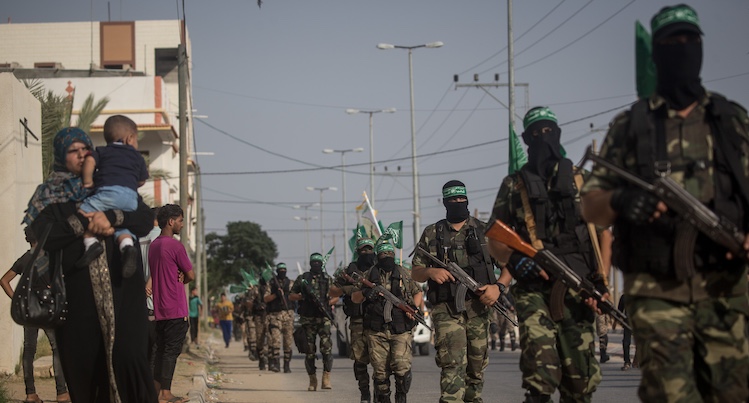
A percolating backlash to Hamas’s intrusion on British politics should not be easily dismissed. A hinge point came in February 2024, when Labour smashed parliamentary norms regarding the voting process in the House of Commons. The reason: Rising pro-Hamas sentiment threatened to split Starmer’s ruling party in two.
But it wasn’t just that: politicians in Britain were openly discussing the effects that personal threats were having on their political behavior. “I never, ever want to go through a situation where I pick up a phone to find a friend of whatever side has been murdered by a terrorist,” the House speaker said in defending his willingness to let parliamentary rules slide just this once.
Starmer’s statehood gambit, Badenoch said on Monday, “is more than a distraction from his inability to deliver for the British people. This affair exposes a deeper rot at the heart of government—a political inclination to surrender without shame.”
Sussan Ley, leader of the Australian opposition, went further, saying her party would revoke the recognition. Conservative Canadian opposition figure Pierre Poilievre showed no hesitation in hitting Prime Minister Mark Carney over recognition: “As he distracts abroad, Conservatives are working at home. Our priority is to put Canada First: restoring stronger take-home pay, safer streets and secure borders within a self-reliant country. Prime Minister Mark Carney’s priority is creating a Hamas state that will reward terrorists for raping civilians, taking hostages, oppressing Palestinians and launching a war.”
Netanyahu will be under a fair amount of pressure to respond in some way to these countries’ recognition of “Palestine.” But he looks increasingly likely to opt for something symbolic, if at all. For now, the responses of Badenoch, Poilievre, and Ley are arguably more than sufficient.